2025 | Professional
Wuhan ARTCITY Zijin Riverside Mansion
Entrant
Shenzhen ARTCITY Holdings Co., Ltd.
Category
Residential Architecture - Luxury Residences
Client's Name
Country / Region
China
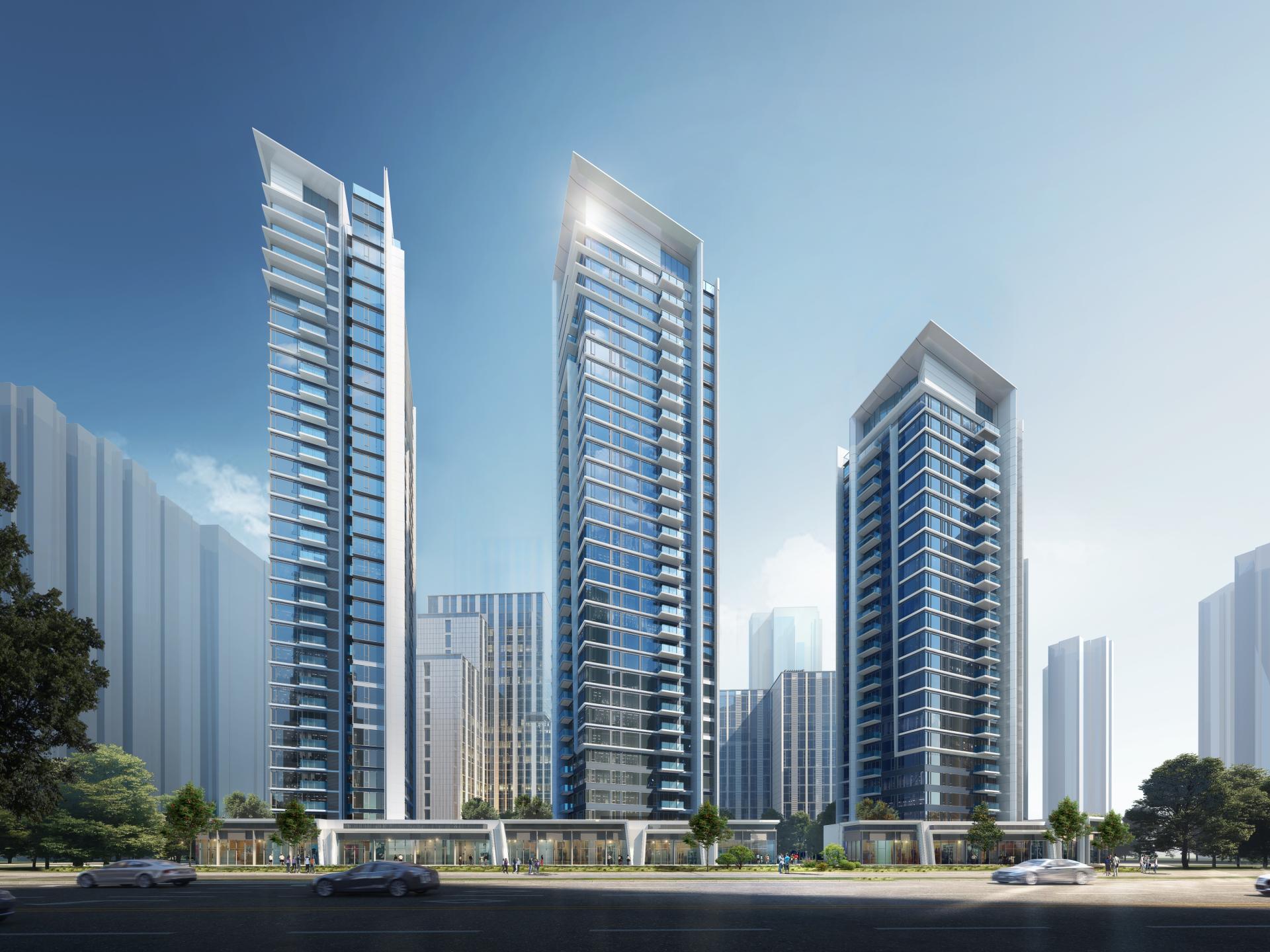
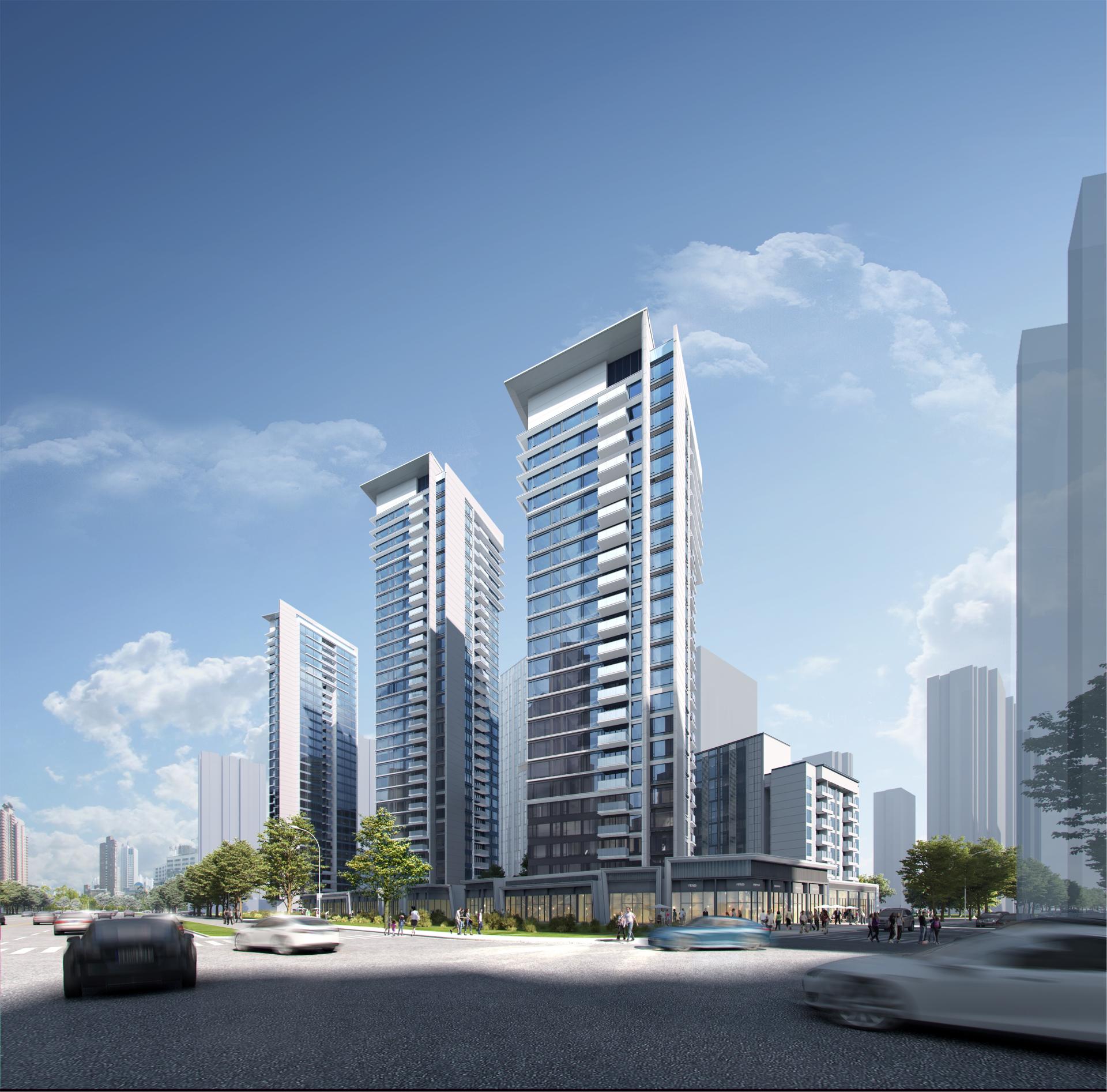
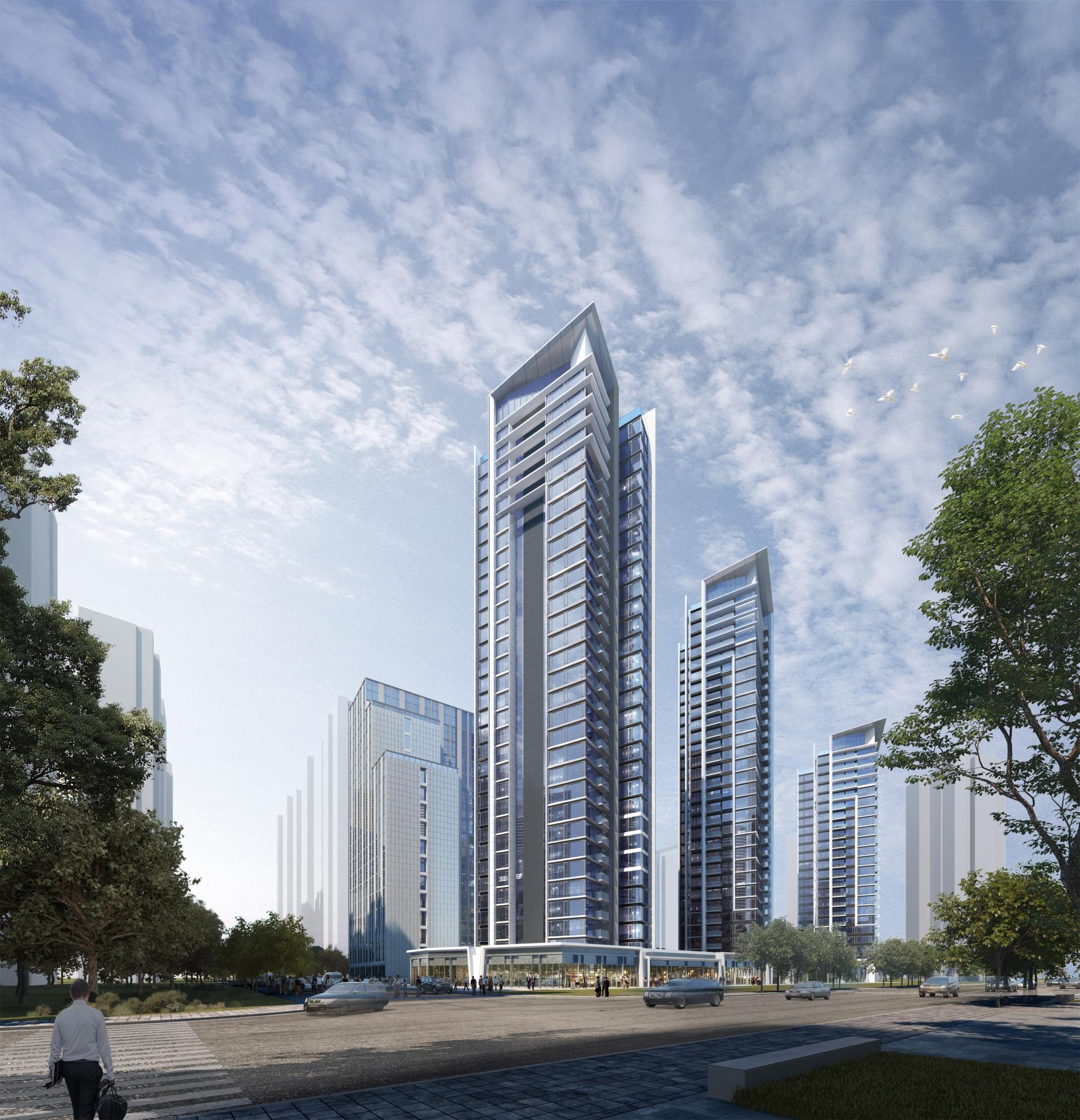
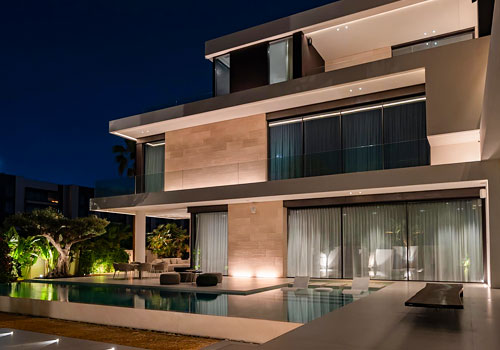
The facade design of the high-rise residences at Wuhan ARTCITY Zijin Riverside Mansion represents an in-depth exploration of modern urban living patterns and the expression of the city interface.
The three street-facing towers, based on cubic volumes, employ a composite material system of glass curtain walls and aluminum panels to create a strong sense of order and a visually striking modernist image.
The top of each building features a recessed termination that extends into a regular cantilevered structure, enhancing vertical articulation while creating an illusion of lightness and suspension. These cantilevered elements connect seamlessly with vertical aluminum panels, forming a continuous "framed view system" that unifies the visual logic of both front and side elevations, avoiding any sense of fragmentation at the corners.
Although the rear elevation does not directly face the city, its design is not diminished. Instead, horizontally and vertically extended aluminum decorative bands converge at the three-edge intersections to form enclosed contour lines, lending structural elegance to the rear facade. The asymmetrical extension strategy on both sides breaks the rigidity of perfect symmetry, enriching the detail composition.
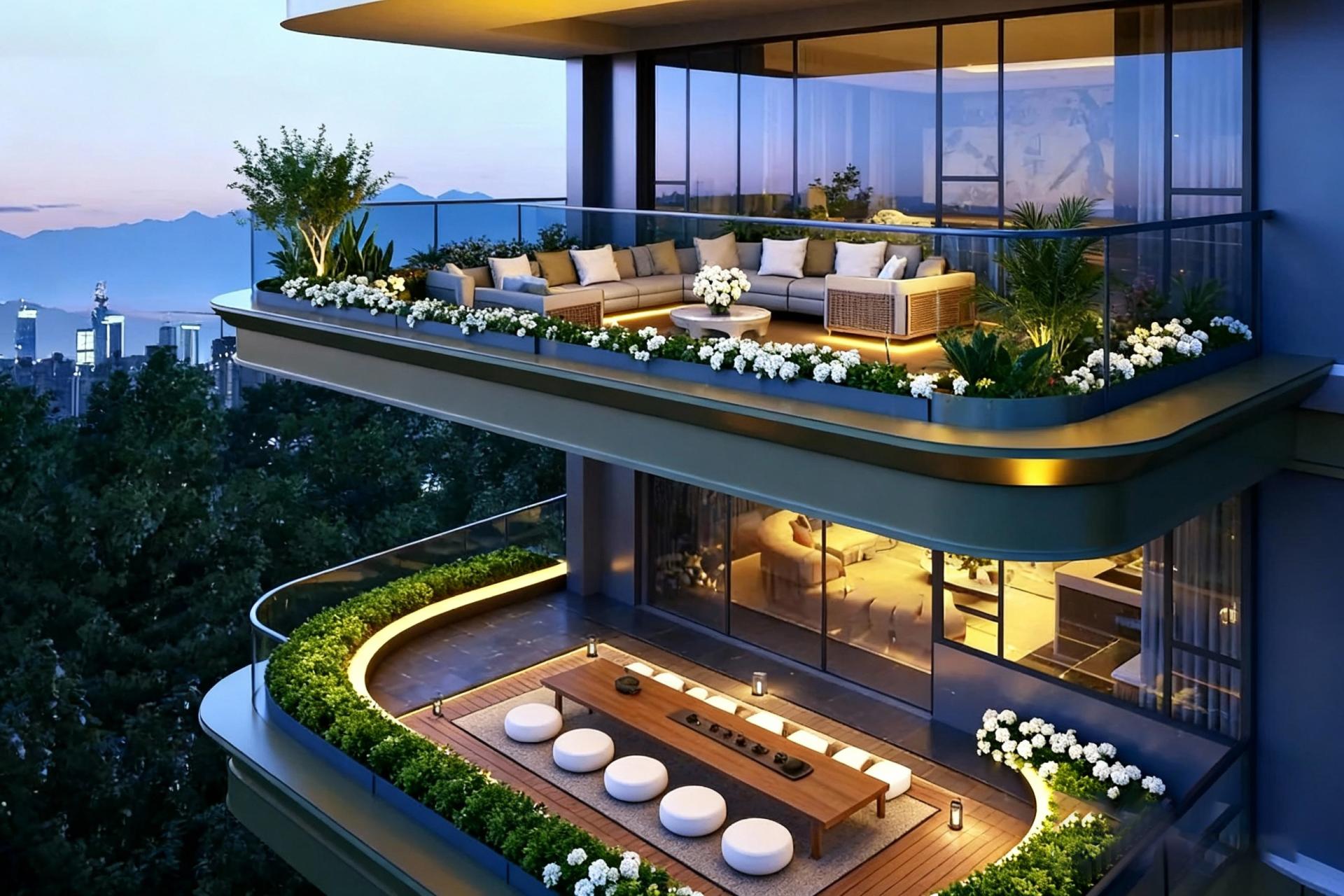
Each floor is equipped with open elevated balconies, replacing traditional enclosed designs. This not only improves the living experience but also adds three-dimensional depth to the facade—when viewed from a distance, the white aluminum railings and glass curtain walls together form a rhythmic "grille grid" pattern.
At levels exceeding the height of surrounding buildings, additional outward-extending aluminum decorative bands are incorporated as key "visual anchors." These elements serve not only as symbols of height but also guide the eye upward, alleviating the potential sense of oppression associated with high-rise structures.
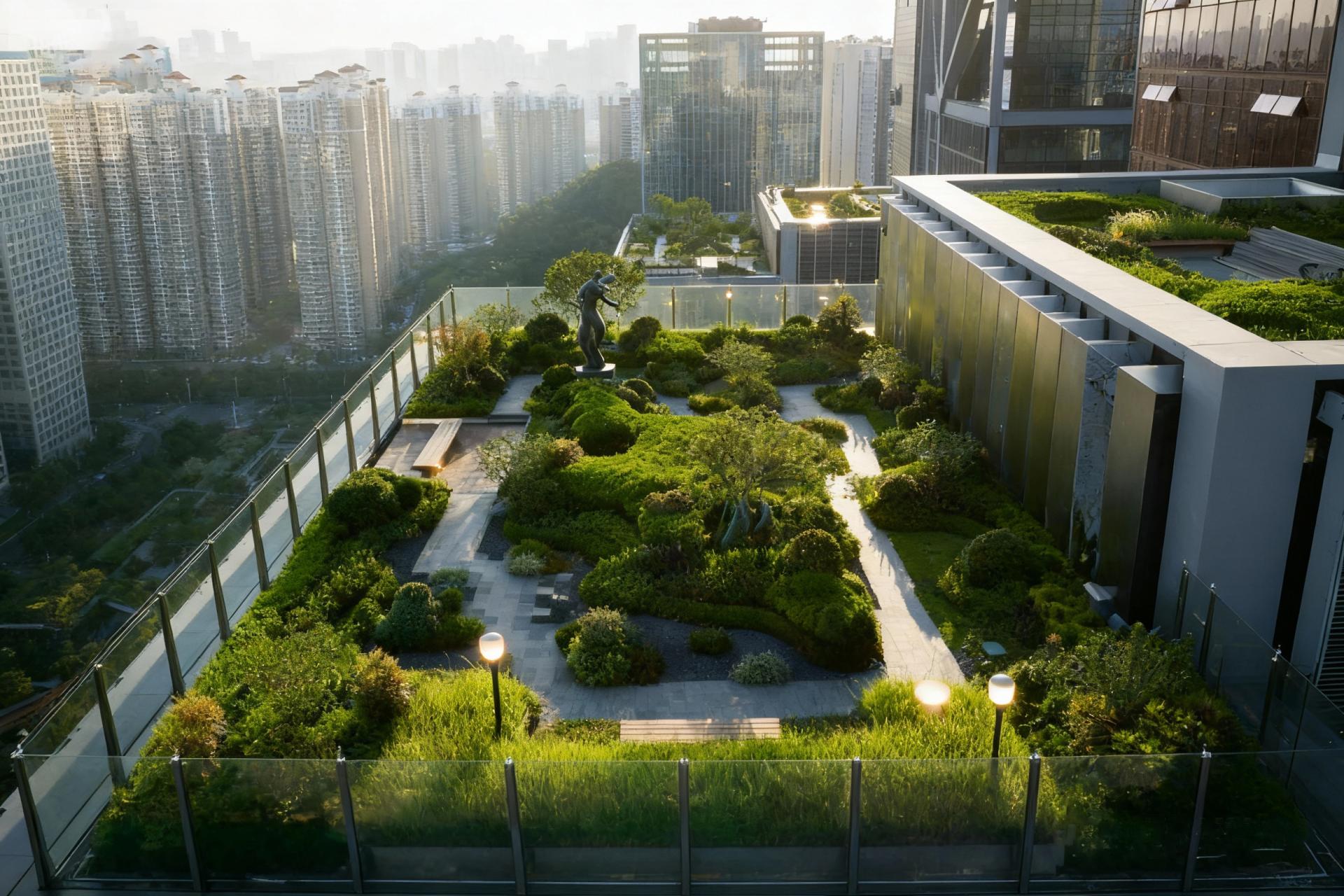
The entire site comprises three high-rise buildings (street-facing) and two groups of low-rise connected structures, presenting a typical "high-front, low-rear" layout: the street-facing high-rises fulfill an urban display function, while the rear low-rise buildings focus on fostering community atmosphere. The rooftop gardens reflect an ecological priority concept, meeting residents' desire to connect with nature and mitigating the sense of constraint often associated with high-density living.

Credits
Entrant
YuanLynn Design
Category
Commercial Architecture - Office Buildings and Complexes
Entrant
KEVIN CHU INTERIOR DESIGN STUDIO
Category
Interior Design - Renovation
Entrant
LUSTRE LIGHTING SOLUTIONS
Category
Lighting Design - Ambient Lighting
Entrant
LIU ZHENGKAI
Category
Interior Design - Commercial