2026 | Professional

Atmospheric Springs: The Future of Fog in Los Angeles
Entrant
Harvard Graduate School of Design
Category
Student Design - Landscape Architecture
Client's Name
Country / Region
United States
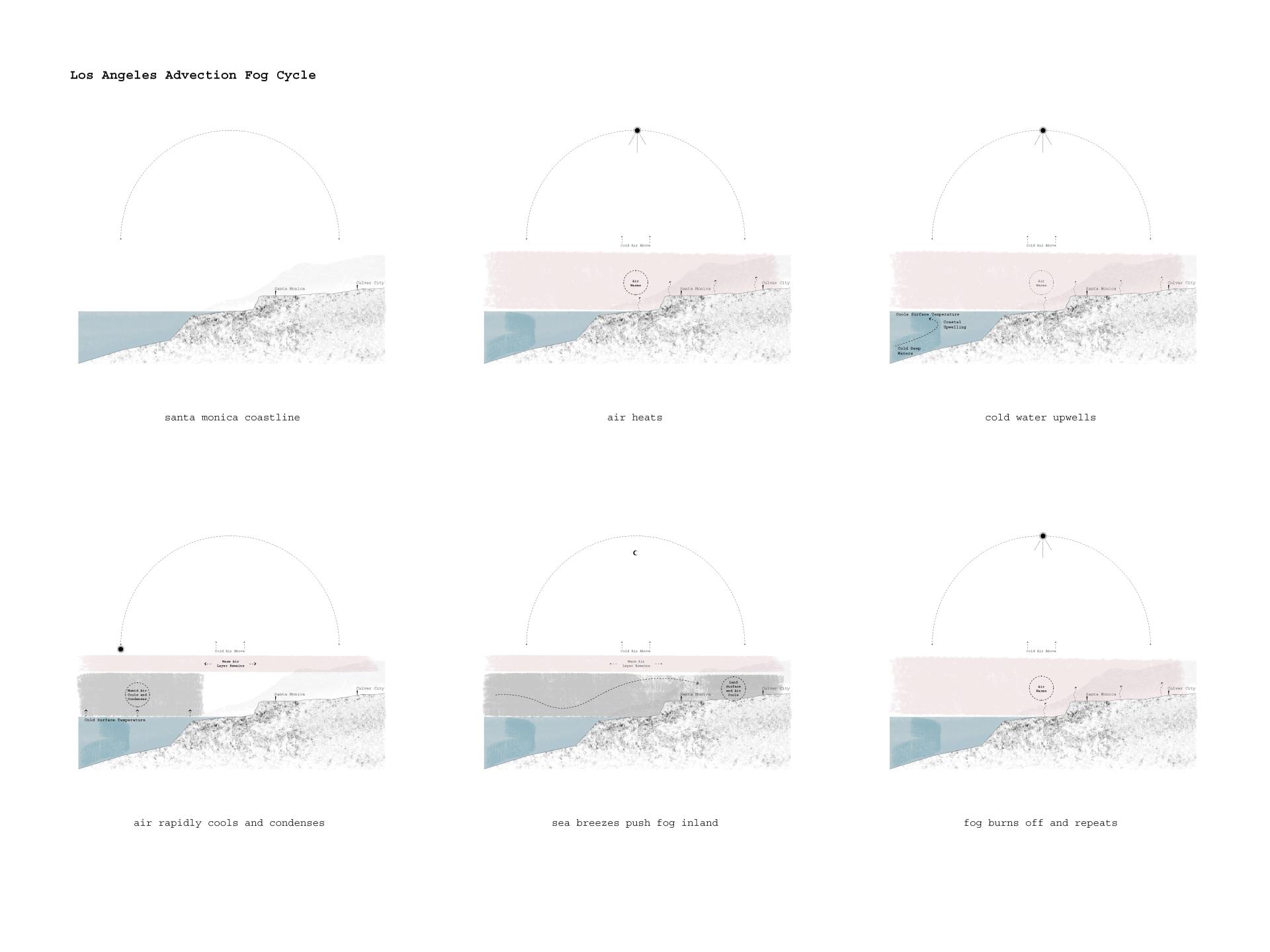
For millennia, coastal fog sustained the ecosystems of the Los Angeles basin, nourishing the vegetation and soils whose moisture fed natural springs where Indigenous communities gathered, long before the city buried its waterways beneath asphalt. Today, that fog still arrives consistently every summer during the very months when the city's water systems are most stressed. Atmospheric Springs asks a simple question: what if the city learned to harvest it?
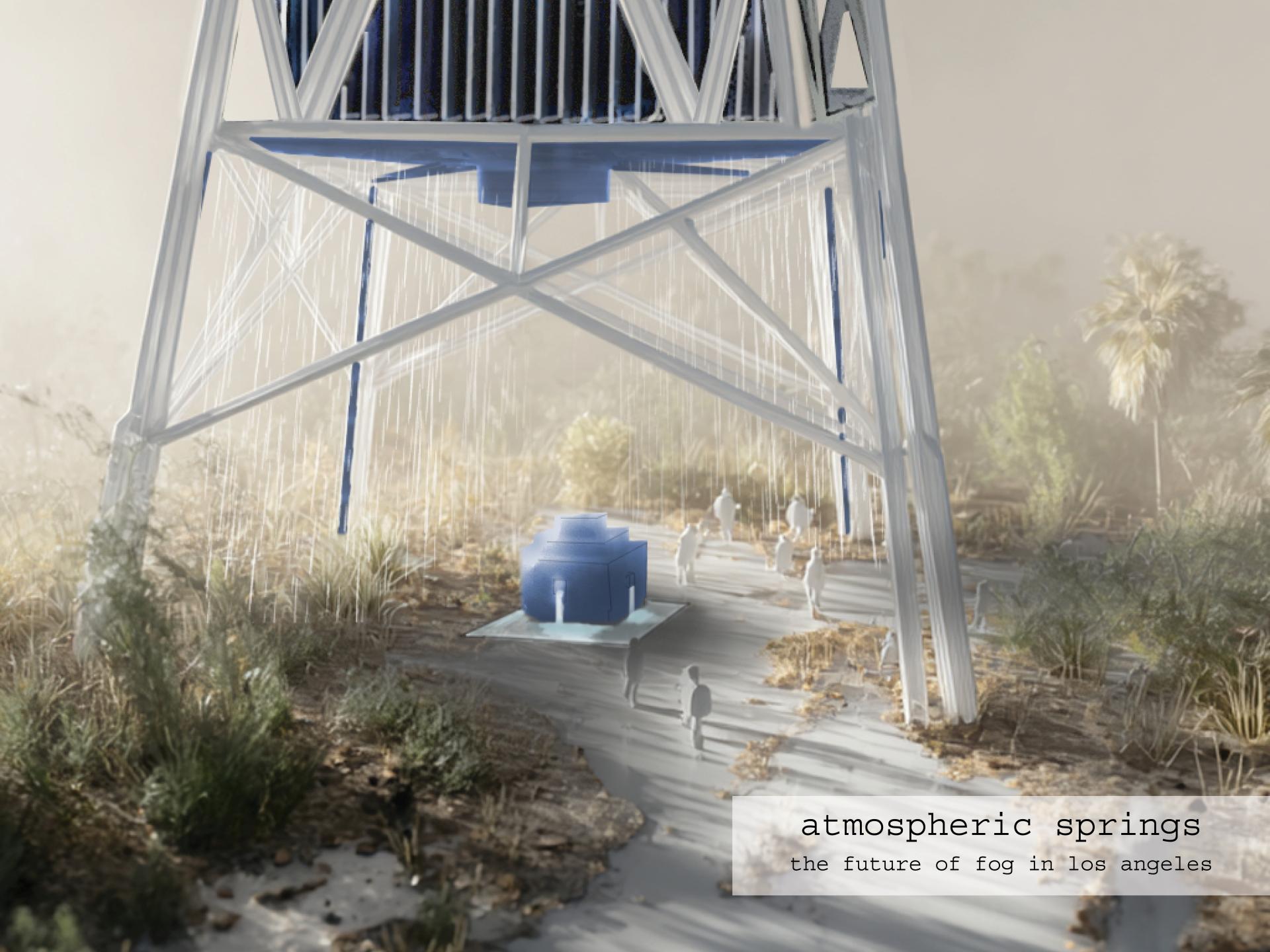
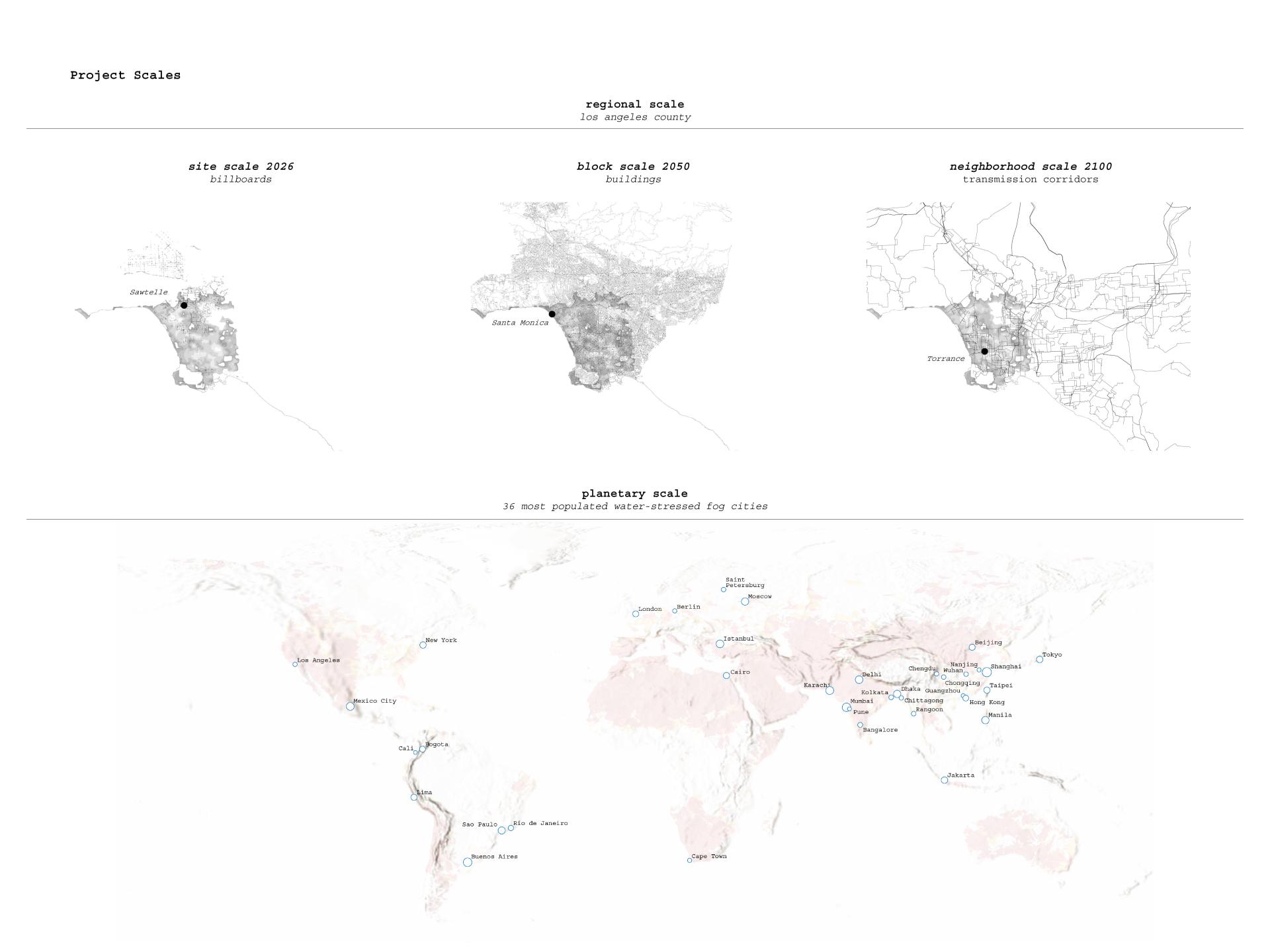
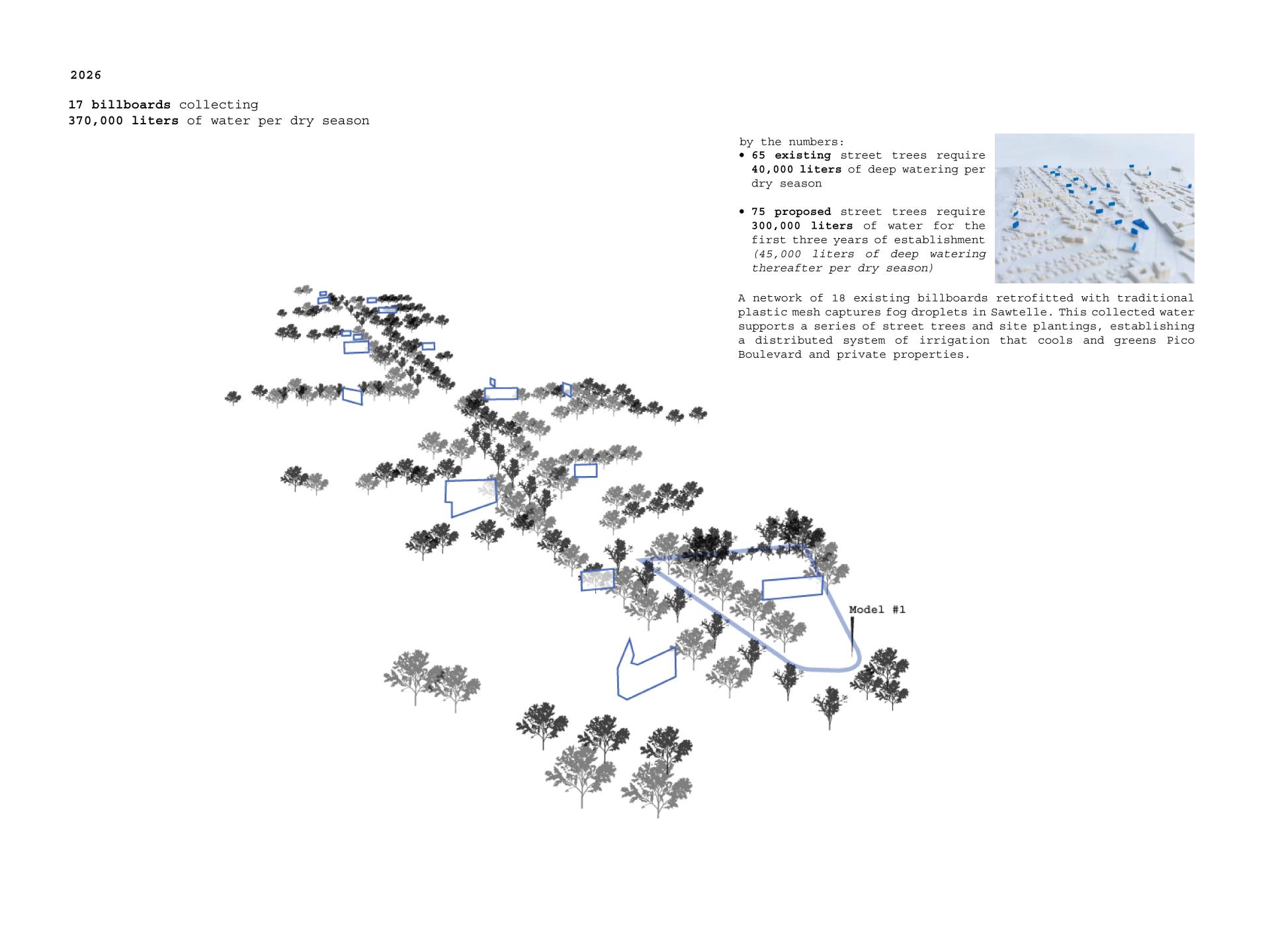
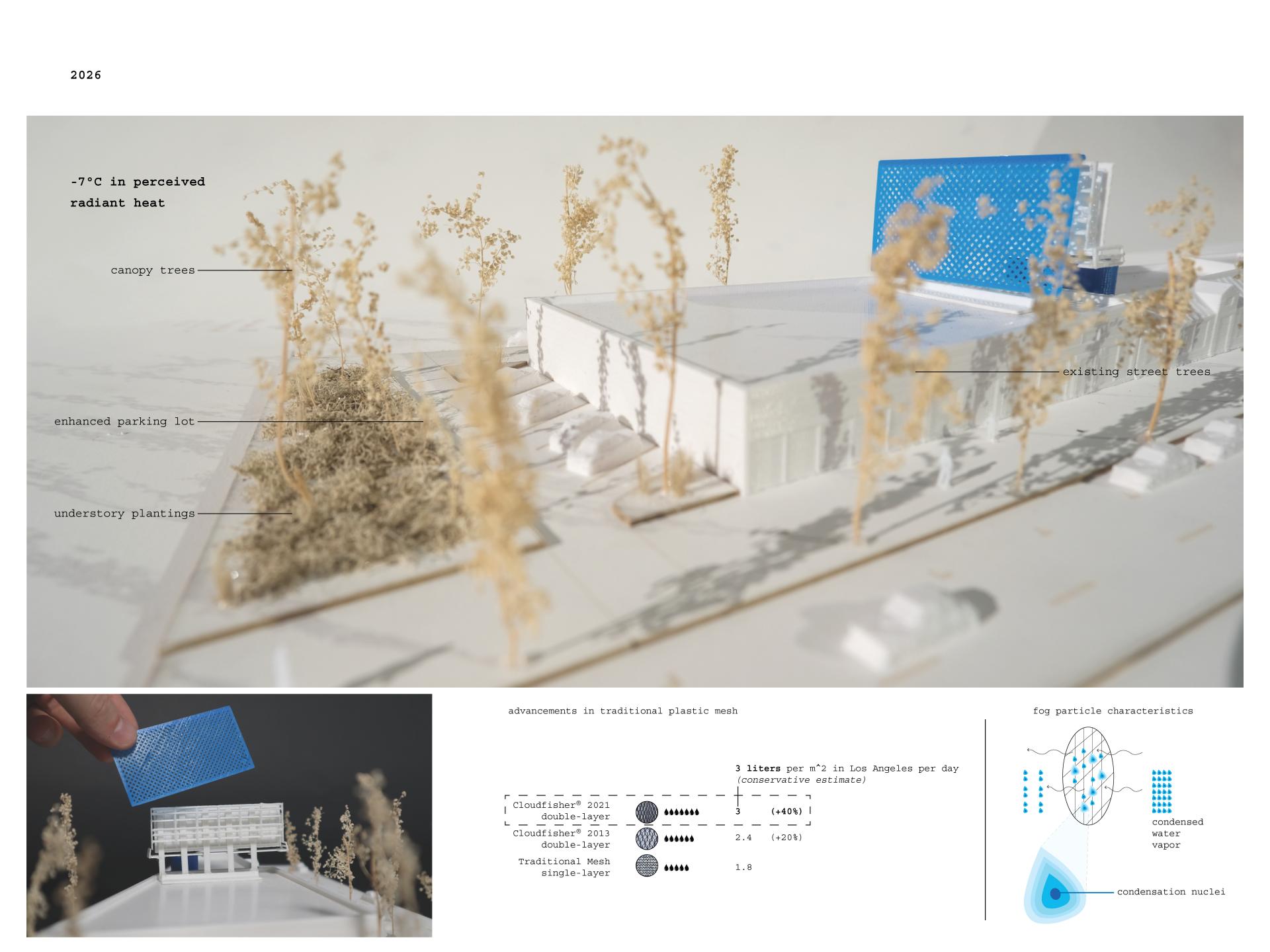
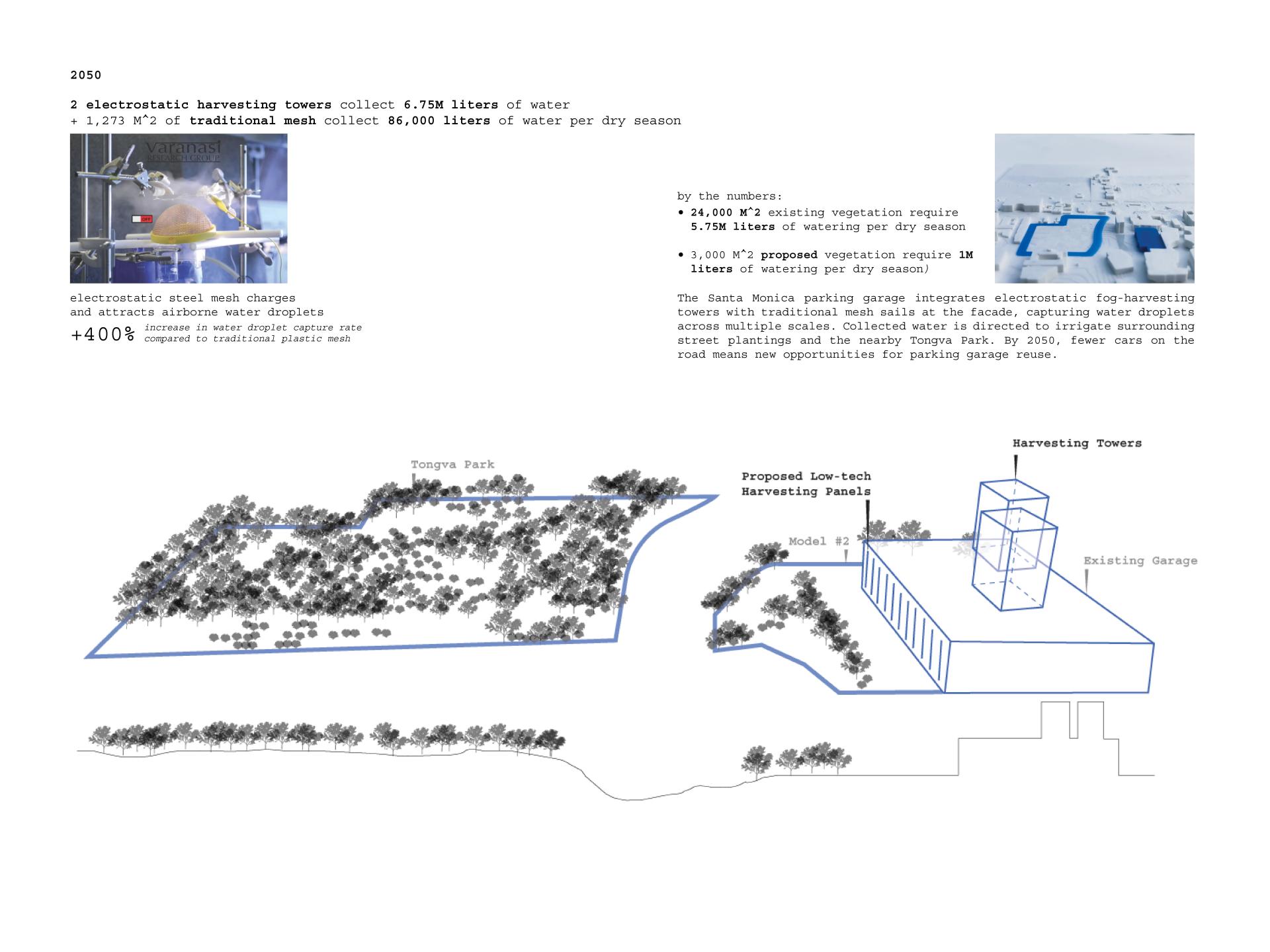
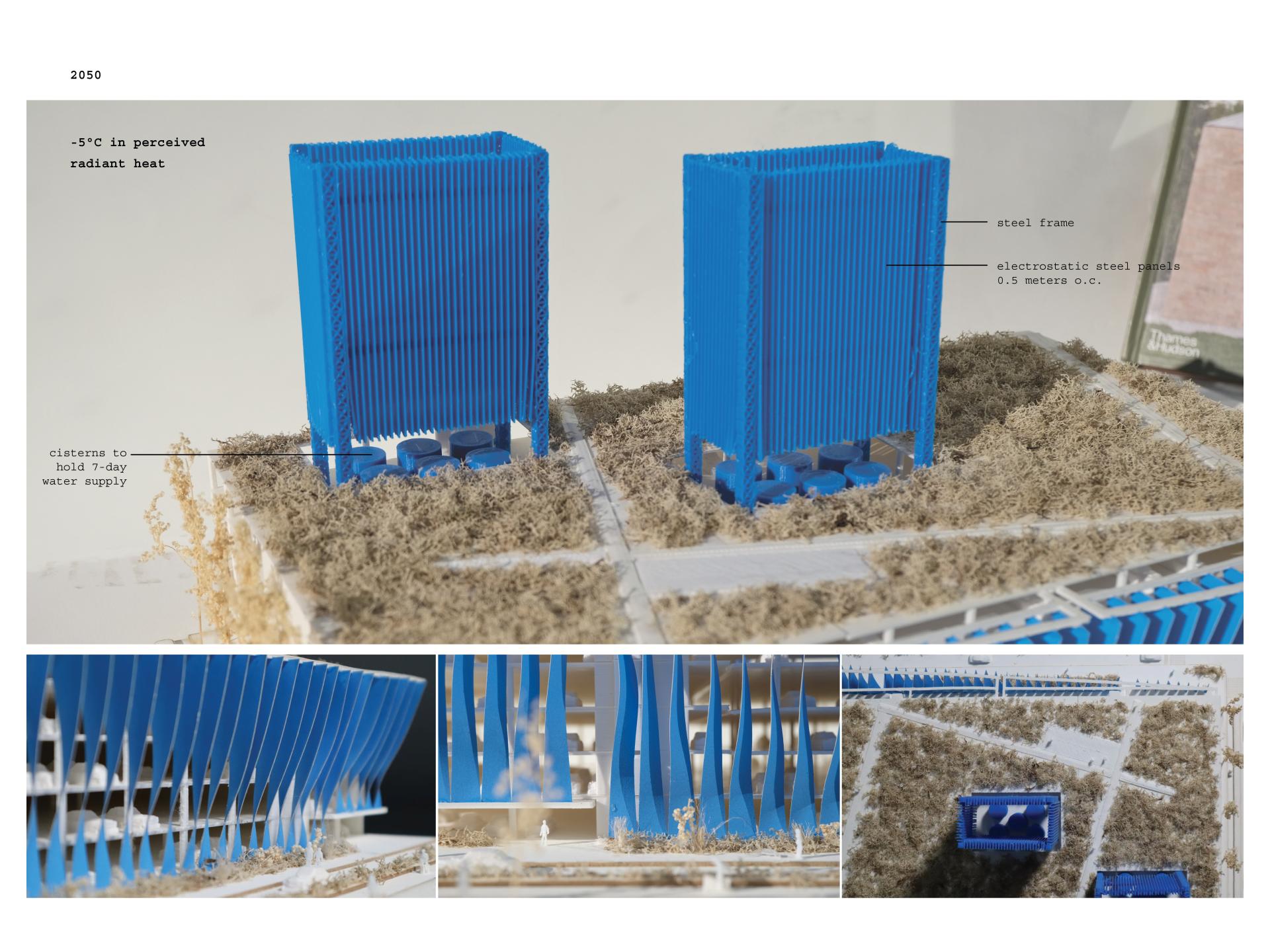
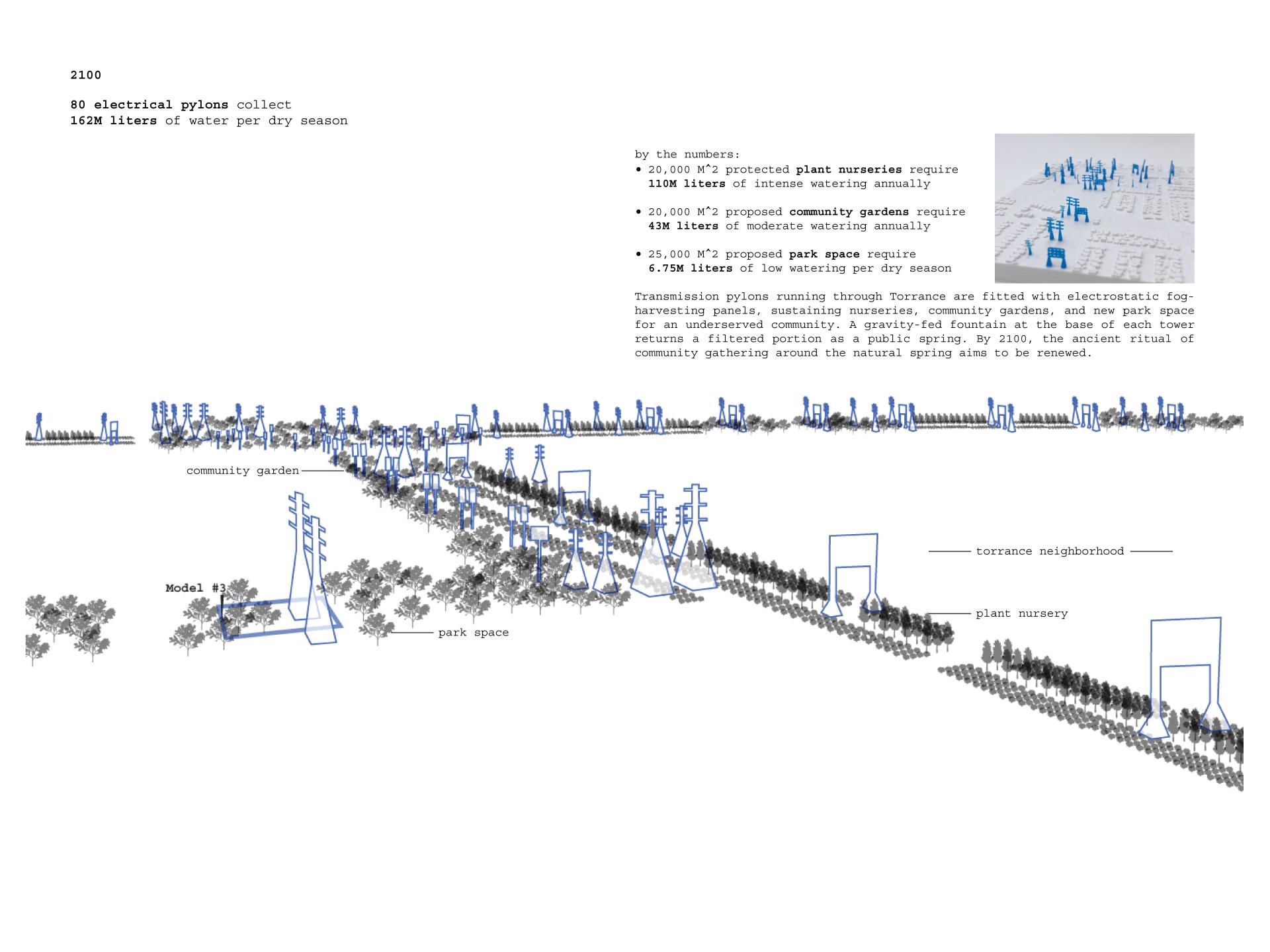
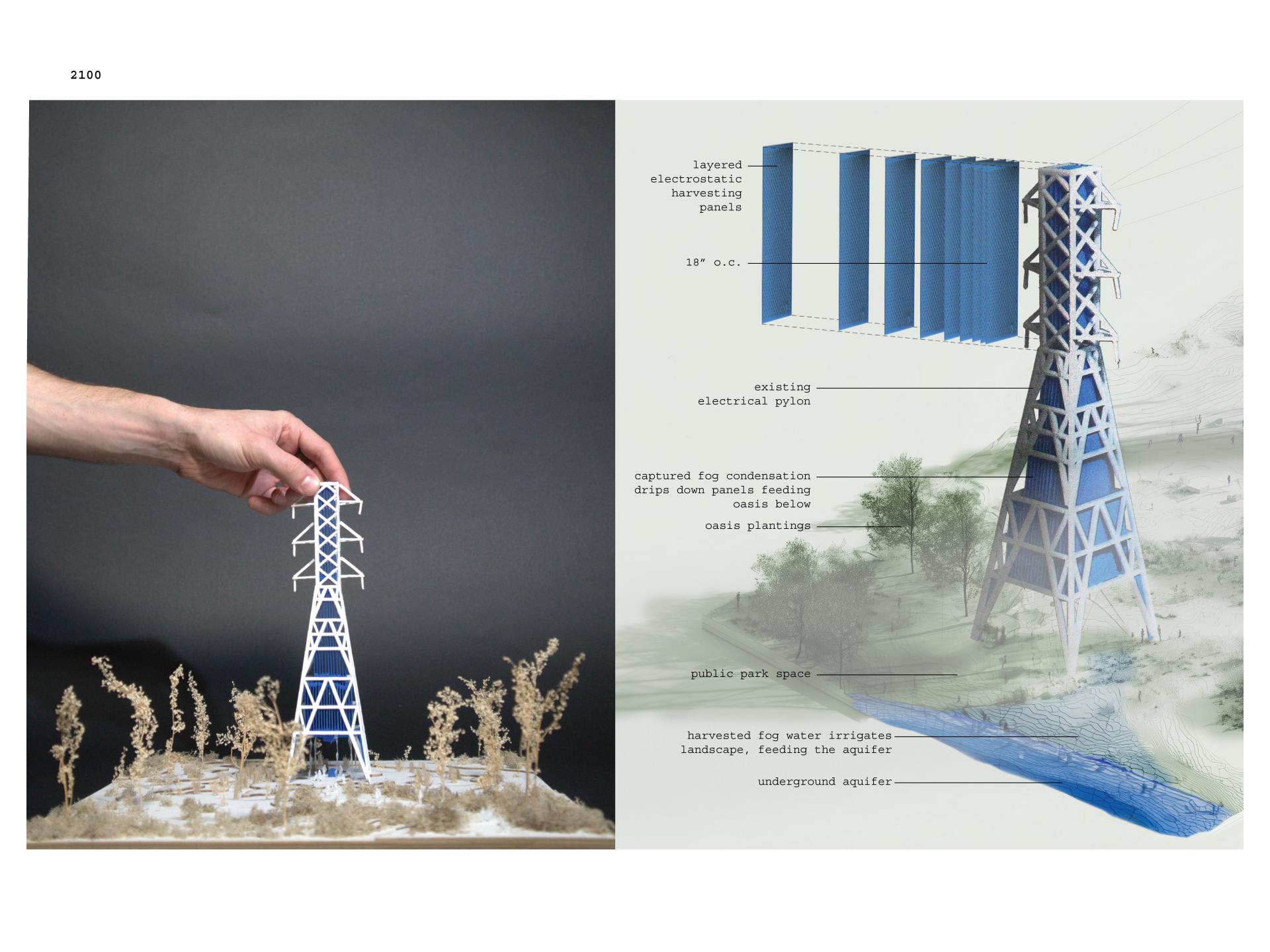
The project proposes a network of fog-harvesting interventions scaled to the urban fabric of Los Angeles, transforming overlooked infrastructure into seasonal water sources. Rather than imposing new structures onto the landscape, it works with what is already there. Existing billboards along the Sawtelle corridor are retrofitted with advanced double-layer mesh, capturing moisture from passing fog and directing it through gravity-fed systems to irrigate street trees below. Along the Santa Monica waterfront, a pair of high-efficiency harvesting towers integrated into a parking structure collect millions of liters per dry season, supplementing the irrigation demands of Tongva Park's established vegetation. At the largest scale, existing transmission pylons running through Torrance are retrofitted with electrostatic panels that sustain nurseries, community gardens, and new park space for an underserved community, while recharging the aquifer. A gravity-fed fountain at the base of each tower returns a filtered portion as a public spring, renewing the ancient ritual of community gathering.
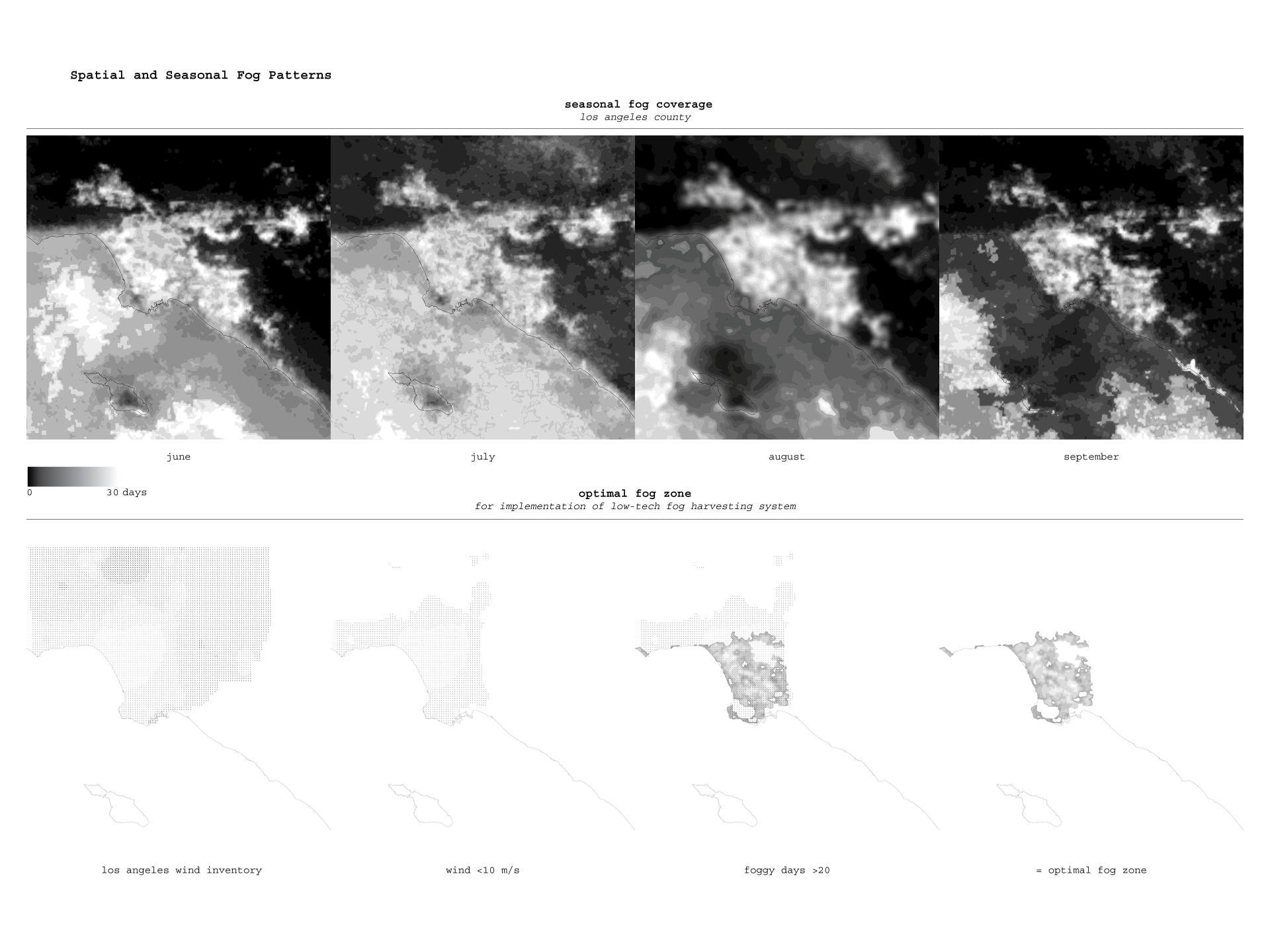
The technology draws from both natural precedent and recent research. Beetles, spider webs, and coastal vegetation have long harvested moisture through surface texture and water-attracting geometry. Advanced electrostatic mesh systems developed at MIT's Varanasi Research Group have since demonstrated capture rates up to 400% greater than conventional fog nets. Atmospheric Springs applies these principles and traditional mesh at an urban scale, calibrated to Los Angeles's specific fog geography, a band of optimal collection concentrated along the coastal plain from May through October. In its fullest expression, Atmospheric Springs is not simply a water strategy: it is a proposal for a new kind of civic infrastructure, one rooted in the atmospheric cycles of the coast, legible in the everyday landscape, and shared as common ground.
Credits
Entrant
epd Landscape
Category
Urban Design and Planning - Urban Regeneration and Redevelopment

Entrant
NKEY FULL INTERIOR DESIGN L.L.C
Category
Interior Design - Residential
Entrant
China University of Technology
Category
Student Design - Interior Design
Entrant
liveraniandrea.com
Category
Cultural Architecture - New Category