Interview
Haochen He
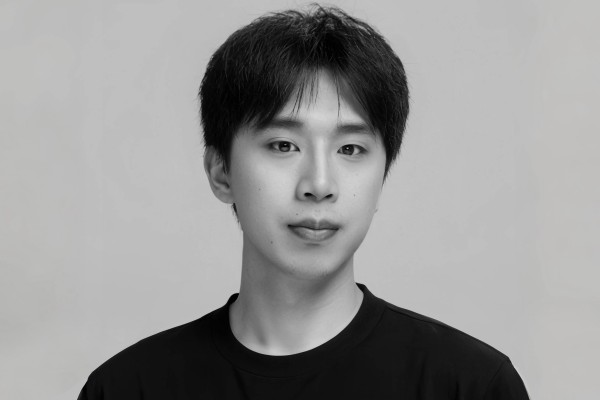
Haochen He, Linhao Li, United States
Drawing from architecture, art, photography, and writing, Haochen He explores how design can adapt to the shifting challenges of our world. His body of work presents architecture as both structure and experience, where precision meets empathy, and collaboration shapes adaptable, human-centered spaces.
1 | Congratulations on your achievement! What inspired you to submit this project for the NY Architectural & Interior Design Awards?
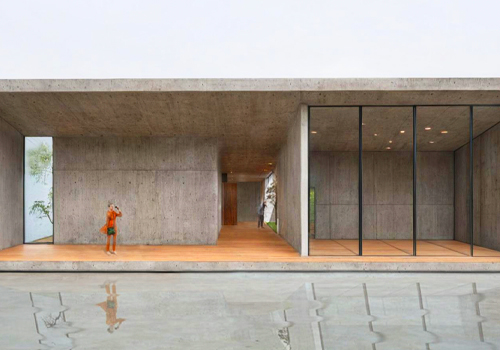
Each of these projects explores how architecture can respond to uncertainty, whether social, environmental, or material. Submitting them together was a way to present three distinct but connected perspectives: infrastructure as resilience, form as collective experience, and incompleteness as possibility. I wanted to show that architecture can serve both the physical and psychological needs of its users, across very different scales.
2 | What is the defining concept or vision behind your award-winning project?
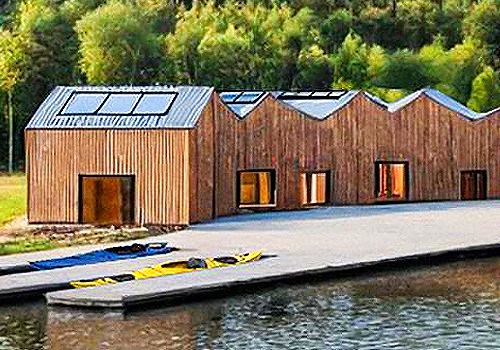
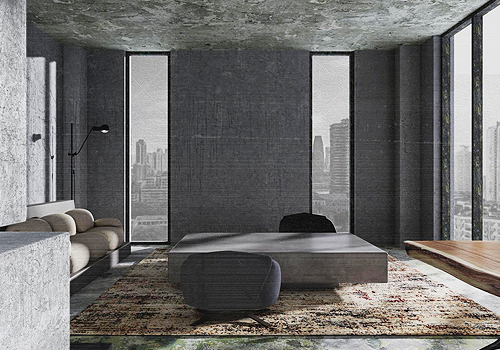
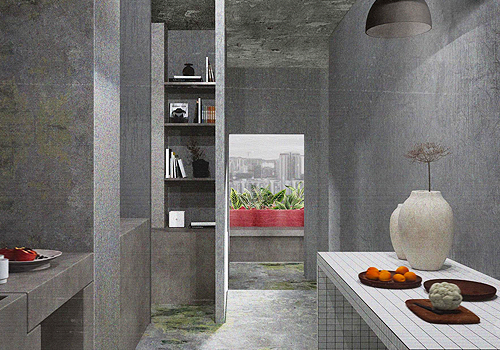
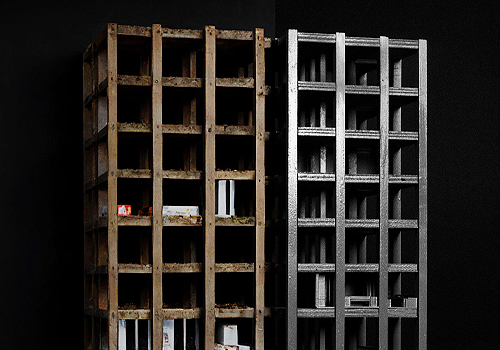
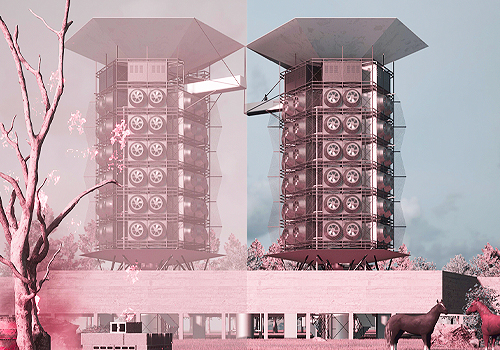
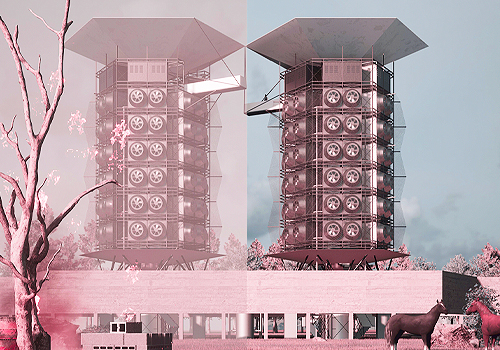
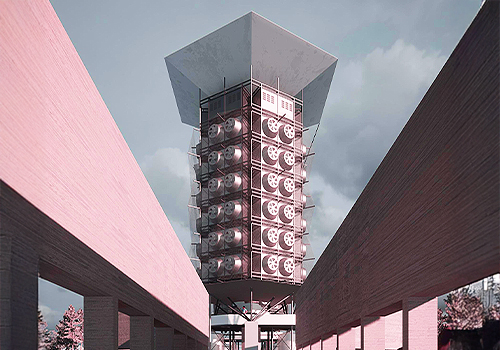
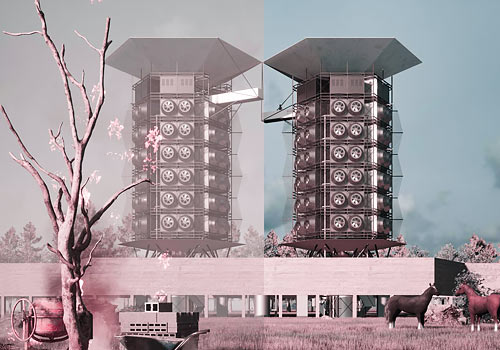
The shared vision across all three works is transformation. TerraFlare redefines energy infrastructure as a social landscape; Folded Rowing Hub translates motion and community into architectural rhythm; Unfinished Reimagined reframes failure as renewal. Together, they represent a belief that architecture should evolve with time, context, and human participation, rather than remain fixed in form.
3 | Could you briefly share your journey into architecture and what inspired you to pursue this field?
My path began with an interest in how people inhabit space. I was fascinated by how even modest structures carry traces of memory and culture. That curiosity expanded through study and practice into a desire to merge spatial clarity with emotional resonance: designing not only buildings but relationships between people, materials, and their environments.
4 | How would you describe the mission or goals of your company or studio?
The mission is to create architecture that unites precision and empathy. Each project begins with a deep reading of context and evolves through collaboration. The goal is not only to build functional structures but to foster shared experiences, emphasizing participation, adaptability, and continuity over time.
5 | Were there any unexpected challenges during the design or construction phases? How did they shape the final result?
Each project carried its own set of challenges. In Unfinished Reimagined, the lack of conventional resources became a catalyst for creativity and material reuse. In Folded Rowing Hub, aligning the technical requirements of athletics with a calm spatial rhythm required careful calibration. TerraFlare demanded a balance between environmental systems and human experience. These constraints did not limit the work; they gave it form and purpose.
6 | How does your design process usually unfold-from ideation to completion?
The process begins with observation -- how people move, gather, and adapt. From there, I construct spatial frameworks that respond to those patterns. Iteration is essential, as is collaboration with specialists and communities. I see each project as an open-ended system, where testing, dialogue, and revision continuously refine the result.
7 | If you had to describe the journey of this project in three words, what would they be?
Resilience, transformation, and continuity.
8 | What feedback have you received about your work that has been particularly meaningful or surprising?
I was most moved when viewers saw human dignity at the center of the designs. Whether it was the adaptability of Unfinished Reimagined or the spatial warmth of Folded Rowing Hub, they recognized architecture not as spectacle but as a framework for living. That kind of response reminds me why I design.
9 | What does receiving this recognition mean for you, your team, or your studio?
It reinforces the importance of pursuing projects that are both conceptually rigorous and socially grounded. Awards are not only acknowledgments of design quality but reminders that architecture has the power to improve the human condition. For my collaborators, it is a shared affirmation that experimentation and empathy can coexist.
10 | How do you see this award influencing your future projects or career?
The recognition strengthens my conviction to continue working at the intersection of design, research, and community. It encourages me to further explore architecture’s role as a connector, between people and place, technology and nature, permanence and change.
11 | What's a project or idea you've been dreaming of bringing to life, and why does it inspire you?
I would like to create a network of adaptive public spaces that respond to changing climates and social conditions. Each site would evolve through participation, where architecture becomes an instrument of collective renewal rather than a finished product. This idea inspires me because it extends beyond design into long-term stewardship.
12 | Where do you see the architectural field heading in the next decade, and how do you envision contributing to its evolution?
Architecture will continue to move toward hybridity, blending ecological systems, digital processes, and human-centered design. I hope to contribute by developing projects that treat uncertainty not as a limitation but as an opportunity, integrating research and storytelling into the discipline’s core methods.
13 | How do you see your designs contributing to the future of sustainable architecture?
Sustainability for me is about adaptability and continuity. Whether through passive design, material reuse, or social engagement, I focus on how architecture can remain flexible over time. A sustainable building is one that allows for change while preserving its core spirit, enabling future generations to reinterpret it.
14 | If you could design anything, with no limits on budget or imagination, what would it be?
I would design an interconnected landscape that merges research, dwelling, and learning, an open laboratory for architecture as living ecology. It would invite people to experience space as a shared resource, reminding us that the act of building is inseparable from the act of caring.