Interview
Xiujian Jia
POWERCHINA BEIJING ENGINEERING CORPORATION LIMITED, China
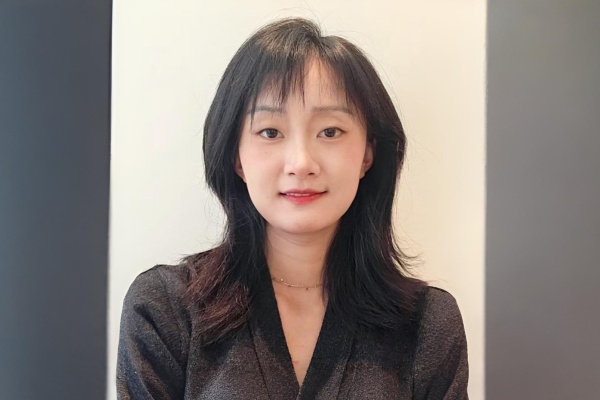
Jingyuan Huang is an architectural designer whose work focuses on rural revitalization through the integration of architecture, ecology, and agriculture. Her approach is shaped by a strong foundation in adaptive reuse, viewing design as a way to connect land, culture, and everyday life across time.
1 | Congratulations on your achievement! What inspired you to submit this project for the NY Architectural & Interior Design Awards?
This project represents a vision of rural revitalization where architecture, ecology, and agriculture operate as one interconnected system rather than separate disciplines. The NY Architectural Design Awards’ emphasis on innovation and social impact made it an ideal platform to share how a rural site can be reimagined through a contemporary architectural lens—one that respects local landscapes while addressing broader cultural and economic transformation.
2 | What is the defining concept or vision behind your award-winning project?
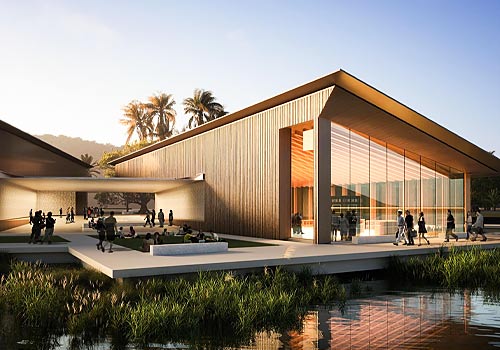
The core vision of the project is “architecture as a frame for landscape.” Rather than treating the rural edge as a boundary, the project redefines the rural edge as a productive cultural landscape, where agriculture operates as a living production system, tourism becomes a catalyst for local economic renewal, and culture acts as the narrative thread linking land, architecture, and community. Architecture takes on a light-handed role, appearing as pavilions, markets, tea rooms, and cultural nodes that support everyday rural life while enhancing the relationship between people and the land.
3 | Could you briefly share your journey into architecture and what inspired you to pursue this field?
My journey into architecture began with adaptive reuse, driven by a deep interest in how spatial design shapes people’s relationship with land, culture, and community. Rather than starting with entirely new construction, I was initially drawn to working with existing structures that are embedded in everyday life and collective memory. Only later did my interest expand toward new construction and, more broadly, toward questions facing the profession today, especially how architecture can remain rooted in history while adapting to present and future needs. That early experience continues to shape how I think about architecture, as a way of connecting people, place, and daily life over time.
4 | How would you describe the mission or goals of your company or studio?
Our studio focuses on shaping environments that strengthen the relationship between culture, community, and everyday life. We see design as a practical tool for change, one that can reveal the character of a place and support how people actually live and use space. Rather than pursuing form for its own sake, our work begins with understanding context, whether rural or urban, and asks how architecture and landscape can work together to create spaces that feel grounded, useful, and lasting.
5 | Were there any unexpected challenges during the design or construction phases? How did they shape the final result?
One of the main challenges came from the site itself. Fluctuating water levels and the rhythms of agricultural use made it clear that a fixed or overly controlled design approach would not work. Instead of resisting these conditions, we allowed them to shape the project. This led to strategies such as elevated walkways, adaptable planting systems, and lightweight structures that can respond to seasonal change. These decisions ultimately reinforced the project’s relationship with the agricultural cycle and helped the architecture remain closely connected to everyday rural life.
6 | How does your design process usually unfold-from ideation to completion?
Our design process usually begins with observation and listening. Before moving into form or solutions, we focus on understanding our clients’ needs, as well as the perspectives of future users who will inhabit the space over time. From there, ideas develop gradually through diagrams, models, and testing at different scales. Design decisions are refined through continuous feedback between site conditions, program, and use. Rather than treating form as a starting point, architecture emerges as a response to real needs, everyday use, and long-term possibilities.
7 | If you had to describe the journey of this project in three words, what would they be?
I'll say the 3 Ts: Tradition, transition and tomorrow.
8 | What feedback have you received about your work that has been particularly meaningful or surprising?
This project was a commissioned work and was originally intended to be built, but it ultimately remained unconstructed due to various constraints. What surprised me was that when I later discussed the project with experienced real estate developers and designers, the response was not hesitation, but genuine interest. They talked about the possibility of finding a new site and adjusting the design in order to realize it. That feedback was very encouraging to me, because it came from people with hands-on experience in building and development. It suggested that the project was understood as practical and adaptable, and worth carrying forward beyond its original circumstances.
9 | What does receiving this recognition mean for you, your team, or your studio?
For us, this recognition is less about validation and more about clarity. It confirms that a way of working rooted in context, everyday use, and long-term thinking can resonate beyond a single project. For the studio, it strengthens our confidence in continuing to pursue work that is careful, grounded, and responsive to place, rather than driven by short-term trends or formal statements.
10 | How do you see this award influencing your future projects or career?
The award encourages me to continue working in contexts that require patience and responsibility, particularly in rural and transitional environments. It creates opportunities for dialogue and collaboration, while also reinforcing the importance of staying focused on the quality and intent of the work itself. Rather than changing my direction, the recognition supports a more confident and consistent continuation of the path I am already on.
11 | What's a project or idea you've been dreaming of bringing to life, and why does it inspire you?
One idea I have been thinking about for a long time is developing a prototype for rural regeneration that can actually be built and adapted in different contexts. Rather than a single iconic project, I am interested in creating a framework where landscape, everyday public spaces, and small-scale architecture work together to support local life. It inspires me because many rural areas are facing similar challenges, loss of identity, economic pressure, and environmental change. I believe architecture can play a quiet but meaningful role by strengthening what already exists and offering spaces that people can truly use and sustain over time.
12 | Where do you see the architectural field heading in the next decade, and how do you envision contributing to its evolution?
In the next decade, I believe architecture will increasingly operate at the intersection of environmental intelligence and spatial intuition. Digital tools will change how we read sites, from climate behavior and water systems to patterns of everyday use. For me, this does not replace architectural thinking, but helps sharpen it. What interests me most is using these tools to support better judgment rather than faster form-making. By combining environmental data with close observation of how people actually use space, I hope to design architecture that is more adaptive, precise, and closely tied to its context. More broadly, I see my contribution as developing a practice that treats technology as a means of deepening understanding, not as a driver of form. In this way, architecture can remain grounded in human experience while responding more responsibly to environmental and social complexity over time.
13 | How do you see your designs contributing to the future of sustainable architecture?
I see sustainability not only as an environmental goal, but as a way of thinking about how architecture relates to time, use, and change. Rather than relying on fixed solutions or technological layers alone, my work focuses on designing spaces that can adapt, age, and remain useful as conditions evolve. This means paying close attention to site conditions, patterns of everyday use, and material choices that support longevity rather than short-term performance. By prioritizing clarity, flexibility, and context, I hope my designs contribute to a more sustainable architecture that is grounded in real life and capable of lasting beyond initial intentions.
14 | If you could design anything, with no limits on budget or imagination, what would it be?
If I could design anything, I would choose to work on something deeply rooted in its local context and able to change over time. I am drawn to spaces that are not fully defined at the moment they are completed, but continue to gain meaning through use, seasons, and human involvement. In this sense, time becomes part of the design process. Architecture does not need to resolve everything at once. It can remain open to reinterpretation and adaptation as life unfolds. For me, this reflects a more honest way of designing, where architecture grows alongside everyday life instead of being fixed in a single moment.