Interview
Chun Yueh Construction Ltd.
Chun Yueh Construction Ltd., Taiwan
Drawing from years of international travel and a foundation in construction management, CaiBao Guo approaches architecture as both a technical discipline and an emotional framework for living. His designs merge Eastern spatial philosophy with contemporary form, creating residential architecture that prioritizes human experience, spatial sequence, and long-term livability.
1 | Congratulations on your achievement! What inspired you to submit this project for the NY Architectural & Interior Design Awards?
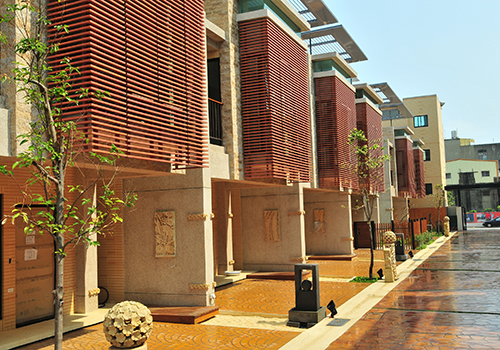
New York has always been a global benchmark for architectural innovation and aesthetics. Therefore, submitting this project to the NY Architectural Design Awards was a natural decision. This is more than just a building—it embodies Taiwan’s land, climate, culture, and lifestyle. We want the world to see that even a small town in Taiwan can create architecture that stands shoulder to shoulder with international works while retaining a deeply local spirit. “Sih Fang Yuan” translates the traditional concept of a courtyard into a modern living design through a New Eastern architectural language. Balancing traditional culture with contemporary aesthetics, it emphasizes the importance of the individual. With its unique design, it breaks the conventional form of a townhouse, cleverly organizing a front courtyard, inner courtyard, back courtyard, and side courtyard. Residents can experience the courtyard atmosphere from multiple perspectives, expanding their living horizons. The courtyards connect family members’ daily routines and emotional bonds, and this thoughtful consideration for each occupant became the project’s standout feature on the international stage, showcasing the distinctive charm of Taiwanese architecture to the world.
2 | What is the defining concept or vision behind your award-winning project?
My creative foundation stems from years of exploration across the globe. I have visited the ancient cities of Europe, the bustling metropolises of Asia, and the serene islands of the South Seas, immersing myself in the essence of each country’s architecture while observing people’s lifestyles and living standards. From the artistic architecture of Spain to the meticulous spaces of Japan, from the natural dwellings of Bali to the courtyard culture of Shanghai, in every journey, I reflect on one question: What kind of life can truly be called “livable”? These cross-cultural experiences have become the inspiration and framework for my work. I transform global observations into a design language for Taiwan, allowing those who live in my buildings to feel their family’s emotions being embraced, understood, and nurtured. I aim to make architecture a vessel for emotion, shaping a world-class Taiwanese living aesthetic through the interplay of light, wind, and the passage of time. To date, I have received seven national first-place architectural awards and eight international design accolades, including the Rome Design Awards, London Design Awards, FADA, MUSE, and the French Design Awards. These honors are not merely recognition—they are a responsibility: to showcase the depth of Taiwanese architecture to the world, and to reveal the emotions and warmth that make a house a home.
3 | Could you briefly share your journey into architecture and what inspired you to pursue this field?
I come from a background in construction management, having spent many years immersed in engineering practice and overseeing building quality. This experience has given me a profound understanding of space, structure, and detail. Later, I began taking annual self-guided trips with my family, witnessing firsthand the living environments, public spaces, and lifestyles across Europe. It was through these journeys that I truly realized: good design can transform the sense of happiness in daily life. At the same time, I came to understand that Taiwanese people deserve world-class living quality. I decided to extend the rational mindset cultivated in construction into the creative and emotional realm of design. At that moment, I told myself: I want to bring these beautiful ways of living back to Taiwan and embed them into architecture. For me, this is a journey from “construction” to “creation,” a path that allows my family—and many others—to experience world-class living.
4 | How would you describe the mission or goals of your company or studio?
“Building the most perfect house for the ones we love, in the best locations, in places we know and cherish.” This wish has always been the ultimate goal driving QunYue, constantly inspiring an unstoppable spirit. With our latest project, Sih Fang Yuan, taking the stage on the world design platform, we are determined to keep exploring every corner of the globe. We set high expectations for ourselves: every new project must surpass the previous one. ‘Next is Best’ may sound simple, but without a lifelong commitment and relentless effort, it is impossible to achieve. Looking ahead, QunYue Architectural Research Institute aims to cultivate warm, family-centered living experiences. We draw from Western aesthetics while integrating Eastern Zen principles, spreading from the heart of each home outward—to neighborhoods, alleyways, and avenues—allowing more people to experience the unique charm of Taiwan where architecture and culture intertwine. Moreover, driven by our love for our hometown, Hualien, we are actively promoting the National Hualien Industrial Vocational Senior High School Seed Program. We welcome juniors and students from Hualien Industrial Vocational Senior High School, regardless of their major or technical background, to follow in the footsteps of their seniors and join the QunYue team in Toufen, Miaoli. This initiative nurtures talent in architecture, construction, marketing, pastry arts, and more, offering rich professional experience. In the future, participants can return to their hometown armed with both skills and resources. We encourage our younger peers: “Starting from Hualien Industrial Vocational Senior High School, you can still reach the world.” By insisting on doing one thing to the very best, the world will naturally take notice of your name—and people will understand that Hualien Industrial Vocational Senior High Schoolgraduates are not only capable professionals but also individuals who can bring warmth and meaning to life.
5 | Were there any unexpected challenges during the design or construction phases? How did they shape the final result?
In the design process of Sih Fang Yuan, the most challenging and hotly debated aspect was my bold decision to carve out a “light well” and “courtyard” within the elongated building form—creating an inner courtyard. At the time, some criticized me: “Doesn’t this look like the old buildings in Lukang? Why are you putting traditional thinking into a modern home?” But for me, this is precisely where the value of design lies. Given the narrow, elongated site, without an opening in the middle, light cannot enter, air cannot circulate, and life inside would feel closed off. I chose to let the building breathe—channeling sunlight through the courtyard, allowing natural light to reach every floor, and letting the energy and emotions of family life converge within. This design became the most distinctive soul of Sih Fang Yuan: a courtyard of light and shadow that belongs only to our home—no one else’s. It is not merely a formal breakthrough, but a steadfast conceptual choice: allowing traditional spatial wisdom to be reinterpreted through the language of modern architecture. That dialogue between light, wind, and people—that is the moment in my creative process that excites me the most and fills me with pride.
6 | How does your design process usually unfold-from ideation to completion?
Whenever I acquire a piece of land, I spend a quiet week there. I observe the direction of the wind, the path of the sunlight, the flow of sounds, and imagine—who will live here in the future? What kind of life will they lead in this place? These images become the starting point of my creative process. I approach architecture with the eye of an artist. In my mind, a building should stand for fifty or eighty years. When people pass by, they should not just see a house—they should feel the artistic value and aesthetic spirit it embodies. People may come and go, but the building remains, continuing to converse with its environment and with people over time. To seek such inspiration, I travel the world. In Spain, I witnessed Gaudí’s genius in allowing architecture to breathe with nature. In Bali, I learned to make rest a part of the building itself. In Tokyo, I experienced the rhythm between order, empty space, and light. Finally, in Shanghai, walking through the courtyards of Tianzifang, I absorbed the soul of “Chinese-style space.” In Chinese culture, family connections are highly valued—parents and children share a space that balances communal interaction with private quiet. This inspired me to introduce the concept of a courtyard in Sih Fang Yuan: on the first floor, I designed a living room and a rear courtyard for the parental room to encourage interaction; on the second floor, natural light is brought in through an inner courtyard and light well, allowing private spaces to enjoy gentle sunlight and a sense of breath. This kind of spatial design fosters more natural family relationships and a more layered daily life. It is not merely the layout of a house, but an extension of a philosophy of living. What drives my creation is the hope that architecture can allow a family’s story to unfold in light and time, making a house a shared memory for generations. I believe that architecture is not only the art of time but also a vessel for emotion.
7 | If you had to describe the journey of this project in three words, what would they be?
“Breathing, Conversing, Growing with Time” My creative style blends the rationality of architectural construction with the sensibility of observing life. I believe architecture is not merely a form, but a living entity—one that can breathe, converse, and grow over time. In Sih Fang Yuan, this belief is embodied in four core design elements: grilles, the daydream pavilion, connected rooms, and the light well. 1. Grilles | The Expression and Protection of Architecture Grilles are the most representative exterior feature of Sih Fang Yuan. They prevent outsiders from seeing in, while allowing those inside to freely look out. This “bounded yet open” visual balance perfectly interprets modern residential privacy and openness. Grilles also provide safety, preventing children from accidental falls near windows. To me, grilles are not only the architectural expression of the home but also its protective barrier. They let sunlight pass through, allow wind to flow, and give family members a sense of security within. 2. Daydream Pavilion | The Lifestyle Philosophy of the Fifth Facade The daydream pavilion represents my extension of the “fifth façade”—the roof. I envision the roof not merely as the structural end of a building, but as an extension of living space. Family members can watch the sky, daydream, sip coffee, or simply do nothing. It is a “slow architecture” that allows people to reconnect with the rhythm of nature amid the bustle of daily life. 3. Connected Rooms | Spaces That Breathe with the Growth of a Family The interior layout of Sih Fang Yuan revolves around the concept of connected rooms, designed to respond to the life cycle of a family—from newlyweds, to infancy, to full bloom. Spaces can adapt to changing family relationships; doors can both divide private areas and link interactive ones. I hope that the home evolves alongside its inhabitants, making architecture a vessel that accompanies life’s stages. 4. Light Well and Windows | Letting Light Become the Soul of the Home The light well is the soul of Sih Fang Yuan. I created a central vertical light well within the elongated building mass—a combination of skylight and window system—allowing natural light to pour into the courtyard, letting wind circulate, and extending views toward the sky. This design not only improves daylighting and ventilation but also transforms the second floor into a natural gathering space for family members—a second living room. By day, sunlight moves across the walls; by night, moonlight becomes the new illumination. I want light not simply as illumination, but as a force that brings the home together.
8 | What feedback have you received about your work that has been particularly meaningful or surprising?
“Sih Fang Yuan” is a home designed for three generations to live together harmoniously. Qun Yue Construction dedicated two years of effort and heart to bring it to life, a process filled with fulfillment and gratitude. Before planning any building, our primary consideration is never the shape of the site, the floor area ratio, or the cost. Instead, we put people at the center of everything, focusing on family as the core that brings everyone together. Even the smallest details are carefully considered, earning trust and appreciation from the residents. The spatial narrative of “Sih Fang Yuan” fully conveys the value of “a courtyard within a courtyard, a wish within a wish.” Through a layered and progressive spatial layout, the design accommodates both gatherings with friends and moments of personal tranquility, allowing everyone to find their favorite corner: a haven for men’s conversations, a stage for women’s gatherings, a playground for children, and the perfect retirement space for parents. These spaces allow interaction and sharing without interference, respecting each family member’s lifestyle and making coming home the starting point of joyful togetherness.
9 | What does receiving this recognition mean for you, your team, or your studio?
For me, 2025 has been a year full of achievement and honor. "Sih Fang Yuan" has once again received international recognition, allowing the world to witness the strength of Taiwanese architectural design. The joy and pride I feel are beyond words. This award is not only a validation of my personal professional expertise but also a tribute to the architectural spirit rooted in my Hualien origins and honed in Toufen. It proves that architecture, even when emerging from local beginnings, can be recognized globally. This award reaffirms our belief that “doing architecture well” is, in itself, the right path. Moving forward, we will hold ourselves to even higher standards, creating works that influence daily life, shape cities, and even resonate with culture.
10 | How do you see this award influencing your future projects or career?
Through this competition journey, I revisited my creative thinking and gained a clearer understanding of how I can continue to grow and break new ground on the international stage. This experience has made me deeply realize that my work serves not only residents in Taiwan but anyone in the world who pursues the aesthetics of living and the soul of architecture. This honor has also become a driving force for me to continue creating. The spirit of “Sih Fang Yuan” now extends into my subsequent works—“Qun Yue Anman” and “Qun Yue Yangman.” In designing these two buildings, I carried forward the four core concepts of Sih Fang Yuan: the expression and protection of the lattices, the “fifth façade” philosophy of the daydream pavilion, the spatial flexibility of interiors that adapt as families grow, and the rhythm of life shaped by windows and natural light. I hope this philosophy can transition from the scale of a townhouse to the height of the city, allowing the warmth of home, the direction of light, and the flow of wind to continue across every floor and through every window. For me, winning this award is not the end, but a new beginning—a chance for the world to continually witness the depth and warmth of Taiwanese architecture.
11 | What's a project or idea you've been dreaming of bringing to life, and why does it inspire you?
My design is inspired by the light and tranquility of Hualien’s Qixingtan and the mountains and structure of Taroko Gorge. Through light, wind, space, and emotion, I aim to craft an architectural language that is uniquely Taiwanese. “I want to spark a movement from a core belief. This is the responsibility of us architects—to start with myself, in order to inspire others. I am not seeking Europeanization; I am pursuing optimization! Optimizing architectural quality to drive the improvement of living environments.” This time, with Private House Courtyard (俬房院), I am making my debut on the stage of European design. Starting from the Hualien Technical High School’s Architecture Department, carrying the dreams of my youth, stepping onto the international stage is not only an honor but also a responsibility. I will continue to write this story—so that more people in Toufen and Hualien can live in truly world-class homes designed in Taiwan.
12 | Where do you see the architectural field heading in the next decade, and how do you envision contributing to its evolution?
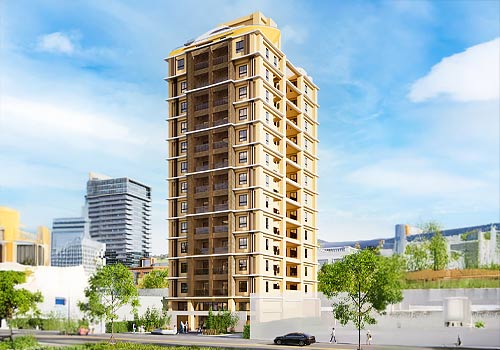
I believe that in the next five to ten years, art and design will move toward “infinite creativity within limited spaces.” As land becomes scarcer and property prices rise, living patterns are shifting from traditional houses to vertical high-rise living. The transition from fifty ping to thirty ping (approx. 165 m² to 99 m²) is not just about smaller areas—it signifies a reconstruction of lifestyle thinking and an upgrade in design intelligence. Future design must be more flexible and adaptable, capable of creating multiple uses within a limited space. Take my recent design for Qunyue Yangman as an example: I integrated the traditional two small balconies into a single 1.8-meter-deep large balcony. It is no longer merely a place for drying clothes—it has become a multifunctional living platform for laundry, hand washing, camping experiences, and even practicing yoga. When the balcony extends into daily life, the home gains a second “breathing space.” At the same time, I combined the 2.7-meter kitchen with the 1.8-meter balcony to create a 4.5-meter-long expansive living strip, allowing light, aroma, sound, and interaction to coexist along the same axis. The kitchen is no longer just for cooking; it becomes the core of family emotional exchange. I also reinterpreted spatial logic: Two traditionally independent rooms were transformed into a connected space that adapts to the family life cycle—from newlyweds to infancy, full household, and eventually empty-nest stage—so the home naturally evolves with time and emotion. In bathroom design, I reorganized “two bathrooms” into two toilets and a shared shower area, improving circulation efficiency, ease of maintenance, and freedom of living. All of these designs point to the same future trend: design is not just the form of architecture, but a force that shapes life. Every corner can be redefined, and every square meter can embody both poetic and practical value.
13 | How do you see your designs contributing to the future of sustainable architecture?
For me, sustainability is not about high costs, luxurious equipment, or stacking technology—it’s about returning to the most fundamental wisdom: natural lighting, natural ventilation, reducing energy consumption, enhancing comfort, and extending the lifespan of a building. By doing architecture the right way, sustainability is integrated into everyday life. Our core concept is simple: make buildings breathe. Through courtyards, light wells, ventilation corridors, and natural materials, sunlight, wind, and rain become part of daily life. Buildings become living entities that grow, communicate, and coexist with time. The four elements—grilles, daydream pavilions, connected rooms, and light wells—form the stylistic vocabulary of my work: the grilles express character, the daydream pavilions set rhythm, the connected rooms embody growth, and the light wells represent the soul. This is "Sih Fang Yuan" —a home that breathes, a building where light, wind, and family live together.
14 | If you could design anything, with no limits on budget or imagination, what would it be?
If budget were no object, I would create a “breathing small city.” A place where architecture coexists with nature, energy is self-sufficient, children can run safely, and the elderly can walk with peace of mind. Every building would bring happiness, not burdens. It would be a city truly for people—no high walls, no oppression—only sunlight, nature, green energy, human-centered transportation, open public spaces, and shared resources. Buildings wouldn’t separate people; they would connect them. My dream for a home is also a dream shared by many. By realizing it, I am realizing the collective dream of home. I aim to seamlessly integrate the best international residential experiences into my designs, so that people don’t just buy a house—they gain a globally recognized standard of living and aesthetics. Residents of Toufen or Hualien can enjoy world-class homes, feeling both proud and honored to live there.