Interview
Xiangyun Mou
Xiangyun Mou Studio, United States
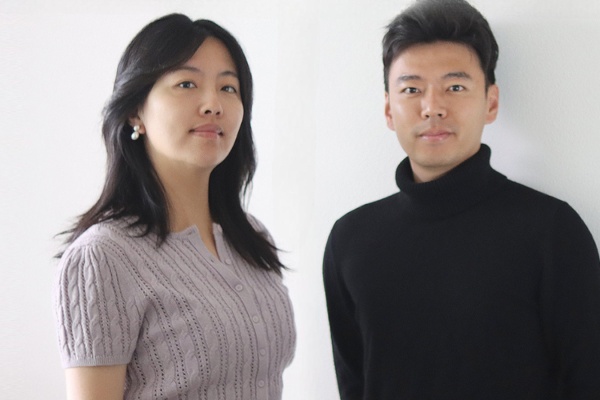
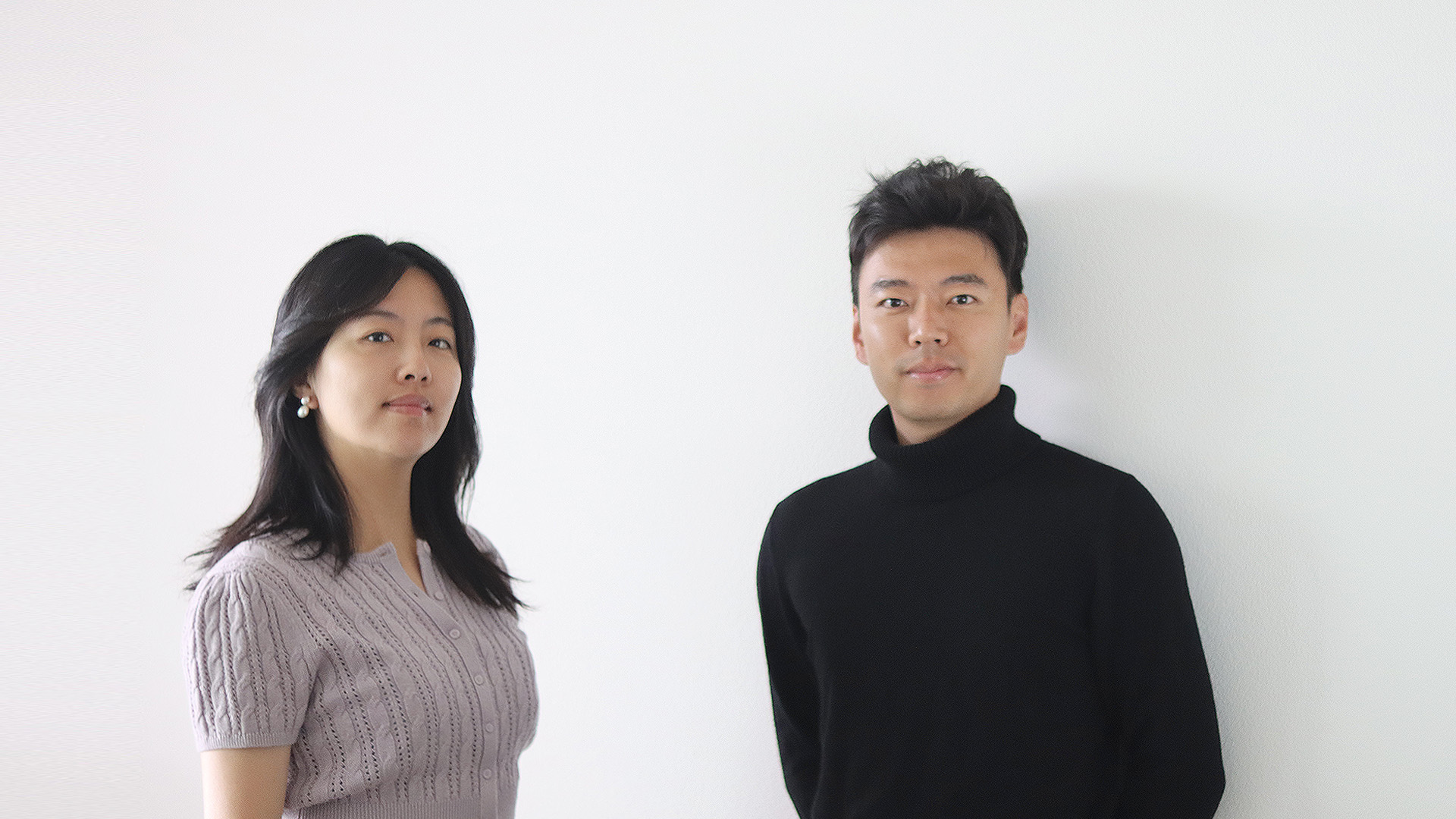
Xiangyun Mou and Shiyu Wu are a design duo whose work bridges architecture, interiors, and research, guided by a shared commitment to sustainability, human well-being, and cultural sensitivity. With cross-disciplinary and cross-cultural backgrounds, their practice combines conceptual clarity with technical precision, focusing on adaptive, resilient environments that respond thoughtfully to both people and place. Together, they explore design as a meaningful tool for shaping healthier and more responsible built spaces.
1 | Congratulations on your achievement! What inspired you to submit this project for the NY Architectural & Interior Design Awards?
This project was inspired by an extended collaborative dialogue between my partner and me on how ecological resilience can be meaningfully integrated with public mobility in contemporary architectural practice. Our collaboration brings together two complementary perspectives. My partner approaches public health through interior wellness and cultural resilience, while I focus on architectural circulation, landmark identity, form-making, and ecological performance. Through this interdisciplinary exchange, the project evolved beyond a conventional design solution into a research-driven exploration of how spatial systems can support both environmental adaptability and collective well-being. We chose to submit this project to the New York Architecture Awards because we believe its value lies not only in its final form, but in the design methodology behind it. The project represents an academic and professional inquiry that we hope can contribute to a broader architectural discourse. Presenting it on an international platform allows the work to engage with a wider audience, generate critical feedback, and participate in ongoing conversations shaping the future of resilient, human-centered design.
2 | What is the defining concept or vision behind your award-winning project?
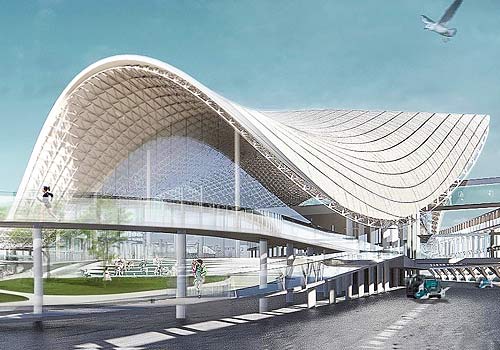
The defining vision behind The Cruise Terminal of Pellestrina is to explore the relationship between ecological resilience, cultural continuity, architectural form, and public interior wellness. The project seeks to integrate these elements into a cohesive design approach that supports both environmental sustainability and human well-being. Inspired by the eyes of traditional Venetian masks—symbolizing Venice’s enduring connection to the sea—the design translates cultural narrative into architectural form and circulation. Rather than functioning solely as infrastructure, the terminal is envisioned as a public space that connects mobility, health, and identity, offering a resilient and human-centered model for contemporary public architecture.
3 | Could you briefly share your journey into architecture and what inspired you to pursue this field?
My journey into architecture began with a strong interest in visual composition and spatial order. As I became more deeply engaged in the field, I came to understand architecture as a powerful framework that shapes human experience, well-being, and collective life over time. Through practice and research, I realized that architecture carries long-term environmental and cultural impact beyond individual buildings. My partner’s work in interior design, cultural sustainability, and public health has further inspired me to pursue interdisciplinary exploration—using architecture as a means to produce knowledge and design outcomes that contribute meaningfully to human and ecological well-being.
4 | How would you describe the mission or goals of your company or studio?
Our studio is dedicated to advancing sustainable and human-centered design with a focus on collective well-being. We integrate architecture, interior environments, and cultural resilience to translate research into everyday spatial experience. We view the built environment as a living system—one that shapes health, memory, and social connection. Through interdisciplinary design, our goal is to strengthen the relationship between people, culture, and the environment, creating spaces that support long-term ecological and human vitality.
5 | Were there any unexpected challenges during the design or construction phases? How did they shape the final result?
One of the primary challenges was the limited site area, which required maximizing spatial efficiency while minimizing ecological disturbance. This constraint led to multiple programming iterations that refined the building’s circulation, form, and functional layout, ultimately strengthening the project’s spatial clarity and environmental performance. Another key challenge was designing efficient passenger circulation within strict spatial limits. By strategically separating arrival and departure flows across different transportation modes, the final design achieves smoother movement, operational clarity, and improved safety. In response to post-pandemic conditions, the interior design integrates technology-driven, contactless systems and crowd-dispersal circulation strategies. These challenges ultimately shaped the project into a more resilient, health-oriented, and human-centered public environment.
6 | How does your design process usually unfold-from ideation to completion?
Our design process is question-driven. For this project, it began with exploring how architecture could support cultural resilience and public well-being within Venice’s unique context. The approach integrates site and environmental analysis, sustainability principles, and interdisciplinary feedback through peer review. This iterative process ensures a balanced outcome that aligns ecological responsibility, functional performance, and civic identity from concept to completion.
7 | If you had to describe the journey of this project in three words, what would they be?
Vision-driven, analytical and evolving.
8 | What feedback have you received about your work that has been particularly meaningful or surprising?
One particularly meaningful piece of feedback came during my master’s studies, when a professor challenged our initial proposal to place the main transportation route underwater. He questioned its necessity, effectiveness, and potential risks, which prompted us to reassess the idea more critically and refine the design strategy. At the same time, my partner introduced alternative thinking on the building envelope, proposing the use of innovative sustainable materials to create a dynamic, responsive façade—one that could “breathe” and adapt through movement. Additional discussions with peer groups further expanded the project’s role as a social and cultural space, transforming boarding corridors into experiential and observational journeys. Together, this feedback encouraged a more comprehensive and mature approach, strengthening the project both conceptually and spatially.
9 | What does receiving this recognition mean for you, your team, or your studio?
Winning this award affirms that the research direction behind the project has been recognized and resonates within the field, encouraging us to continue deeper investigation. Receiving another Gold Award from such an influential competition is both an encouragement and a validation of our work. Rather than marking an endpoint, it reinforces a sense of responsibility—to critically reflect on what can be improved and to further refine these ideas in future projects. This recognition strengthens our commitment to ongoing research, evolution, and meaningful contribution to architectural practice.
10 | How do you see this award influencing your future projects or career?
This award reinforces the relevance of our research-driven approach and encourages us to continue advancing design that integrates ecological resilience, public well-being, and cultural context. Moving forward, it strengthens our commitment to applying these ideas across future projects and to contributing more actively to the broader architectural discourse through practice, research, and collaboration.
11 | What's a project or idea you've been dreaming of bringing to life, and why does it inspire you?
We are most inspired by projects that operate at the intersection of public health, cultural continuity, and ecological resilience—particularly civic or infrastructural spaces that shape everyday collective experience. We are drawn to opportunities where architecture and interior environments can work together as a system: supporting well-being, responding to climate and mobility, and carrying cultural narratives forward in a contemporary way. These projects inspire us because they allow design to move beyond form-making and become a meaningful framework for long-term social and environmental impact.
12 | Where do you see the architectural field heading in the next decade, and how do you envision contributing to its evolution?
Over the next decade, we see architecture evolving through a more direct dialogue between rapidly advancing technologies and deeper considerations of cultural continuity and human health. Digital tools and data-driven systems will increasingly shape how buildings perform, but their true value will lie in how they support embodied experience, well-being, and long-term cultural meaning. Our contribution lies in bridging these domains. Through research-driven practice, we aim to integrate technology with architectural and interior design that responds to ecological resilience, public health, and cultural context—using innovation not as an end in itself, but as a tool to create more humane, adaptive, and meaningful environments.
13 | How do you see your designs contributing to the future of sustainable architecture?
For us, sustainable design is not just about technical performance or environmental metrics. We see sustainability as something that needs to work across multiple layers—ecology, culture, health, and daily use—and remain flexible over time. Our projects often start by asking how a space can adapt to changing environmental conditions while still supporting people’s physical and emotional well-being. Coming from both architectural and interior perspectives, we’re interested in how material choices, circulation, spatial comfort, and cultural reference all play a role in creating environments that people can actually live with long-term. We’re also influenced by our cross-cultural background and research-based practice, which makes us sensitive to how sustainability is experienced, not just measured. For us, a truly sustainable space is one that can evolve—socially, environmentally, and culturally—without losing its relevance or meaning. Through this approach, we hope our work contributes to a more resilient and human-centered understanding of sustainability, where design supports everyday life as much as long-term ecological responsibility.
14 | If you could design anything, with no limits on budget or imagination, what would it be?
We’re less motivated by the idea of designing something without limits for its own sake, and more interested in responding to real and emerging challenges. If there were an ideal project without constraints, it would likely be driven by the need to address issues that don’t yet have clear solutions. In that sense, our dream project would focus on pushing technological boundaries in the service of public health—creating a new kind of integrated support system rather than a single building. We’re interested in how architecture, interior environments, data, and responsive technologies could work together to support physical health, mental well-being, and collective resilience at a civic scale. What excites us is not spectacle, but the possibility of designing something genuinely new, an environment that adapts to people, anticipates changing conditions, and quietly improves everyday life. If imagination and resources weren’t limited, we would use them to test how far design can go in supporting human health in meaningful, long-term ways.