2026 | Professional

The Urban Gallery:Reimagining Space Through Mural Network
Entrant
Zitong Hui
Category
Landscape Design - Landscape Renovation
Client's Name
Country / Region
United States
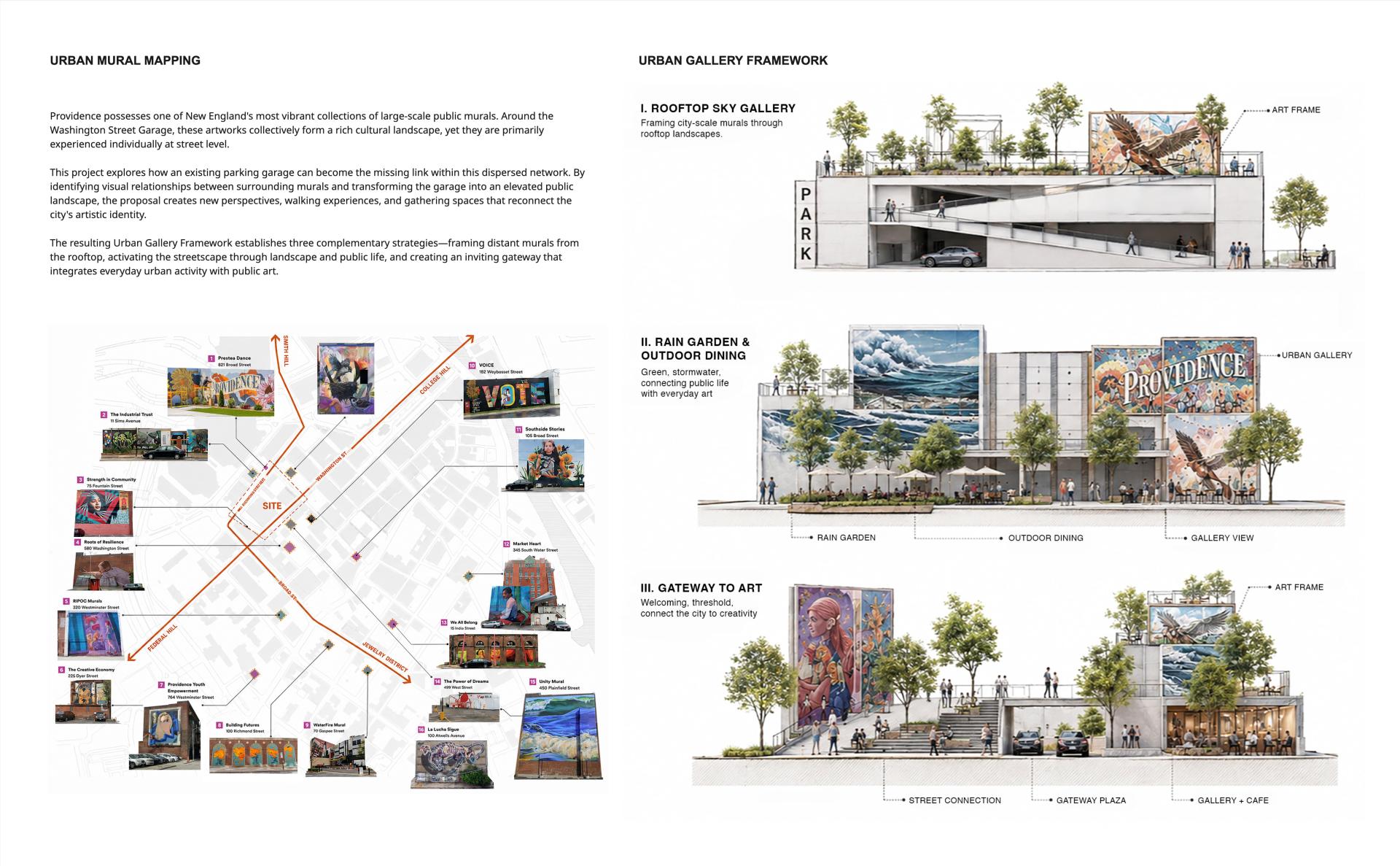
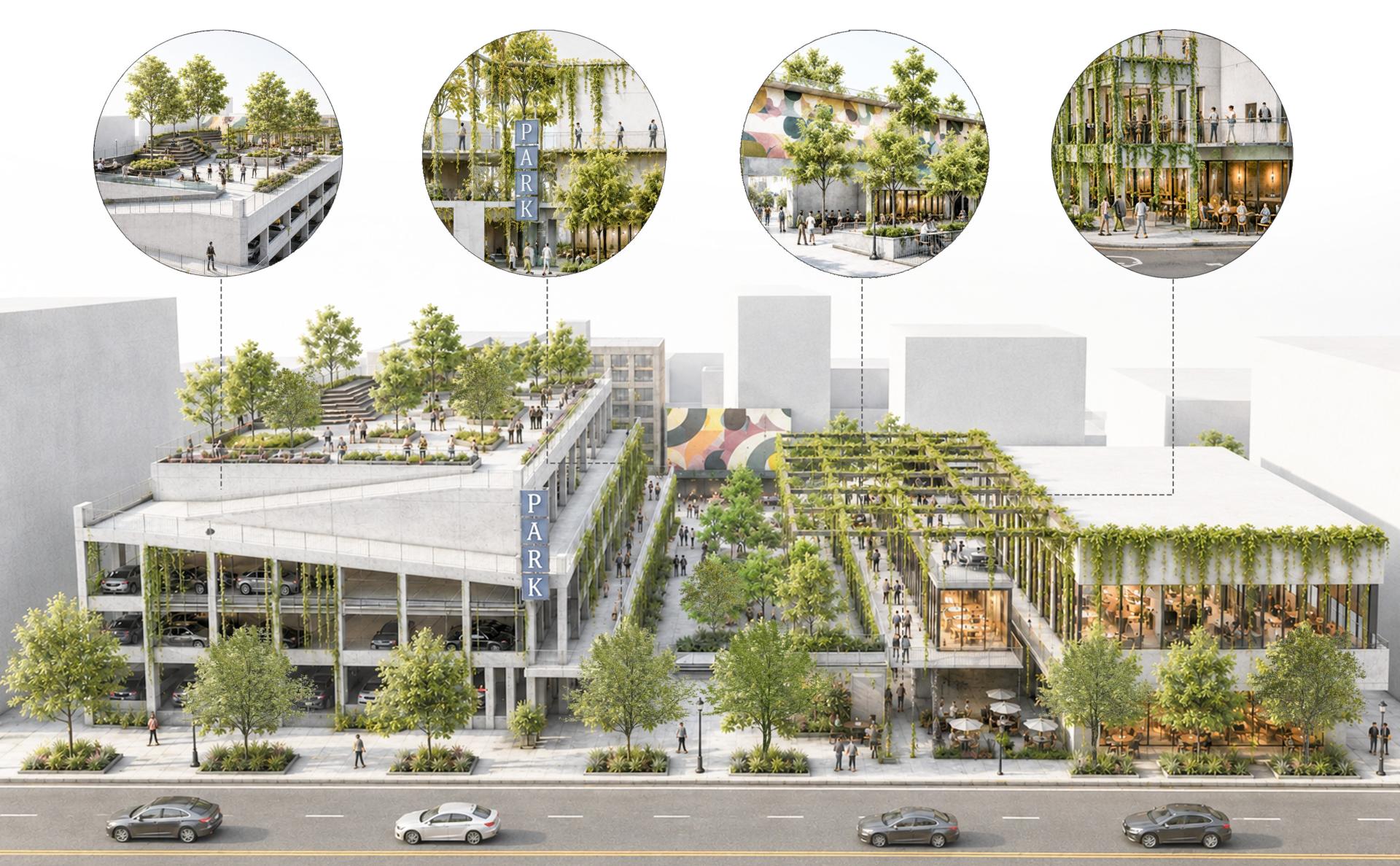
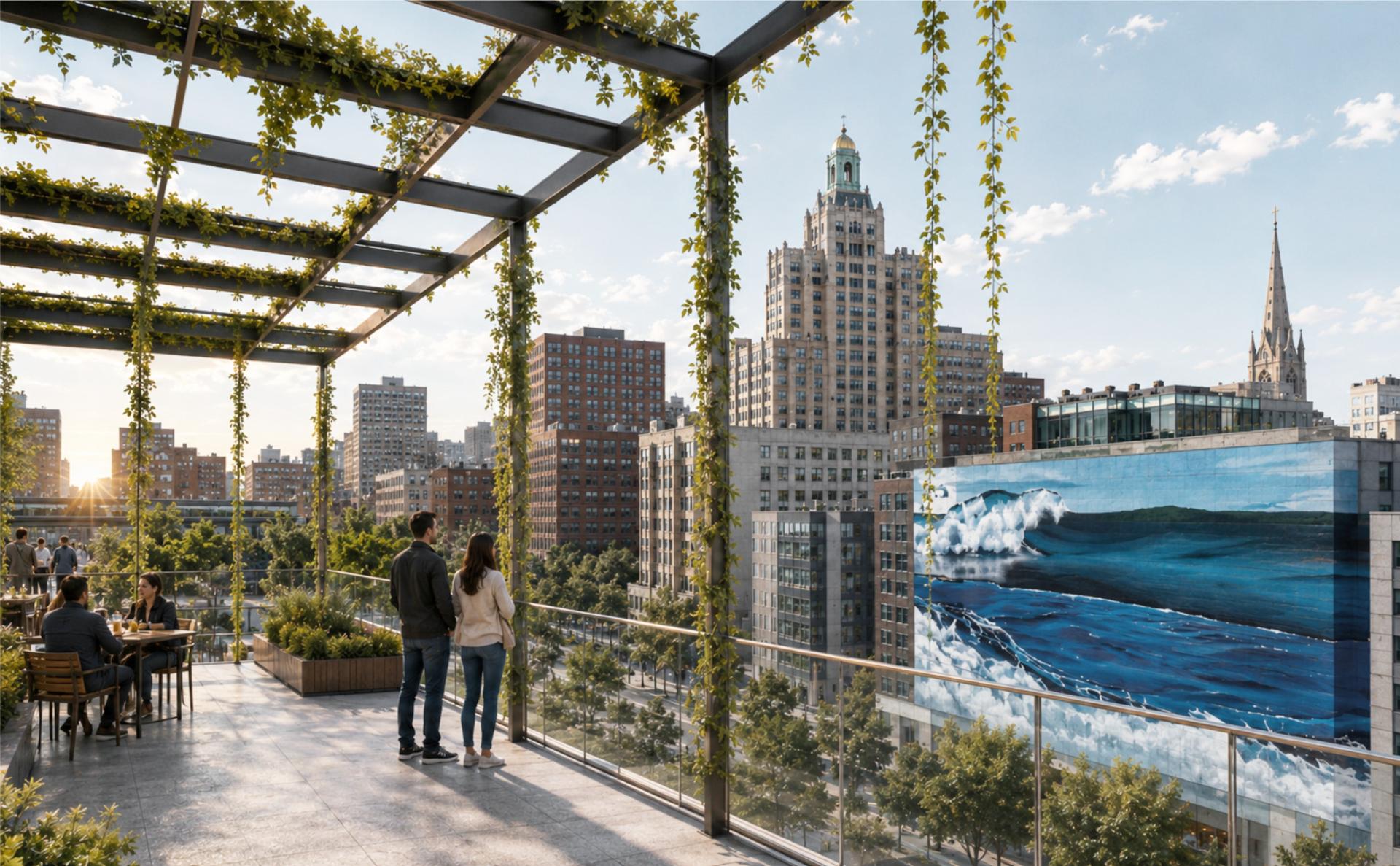
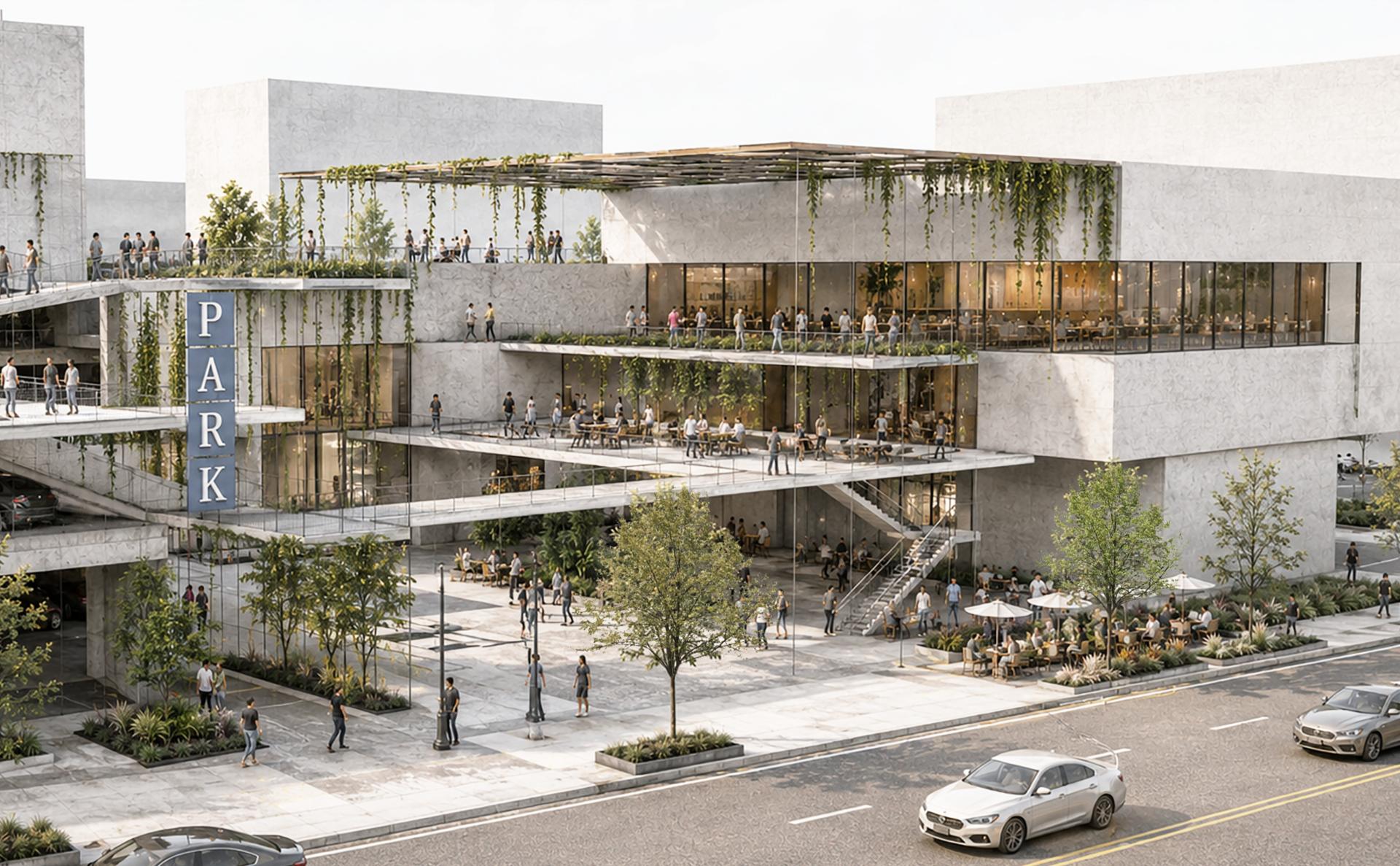
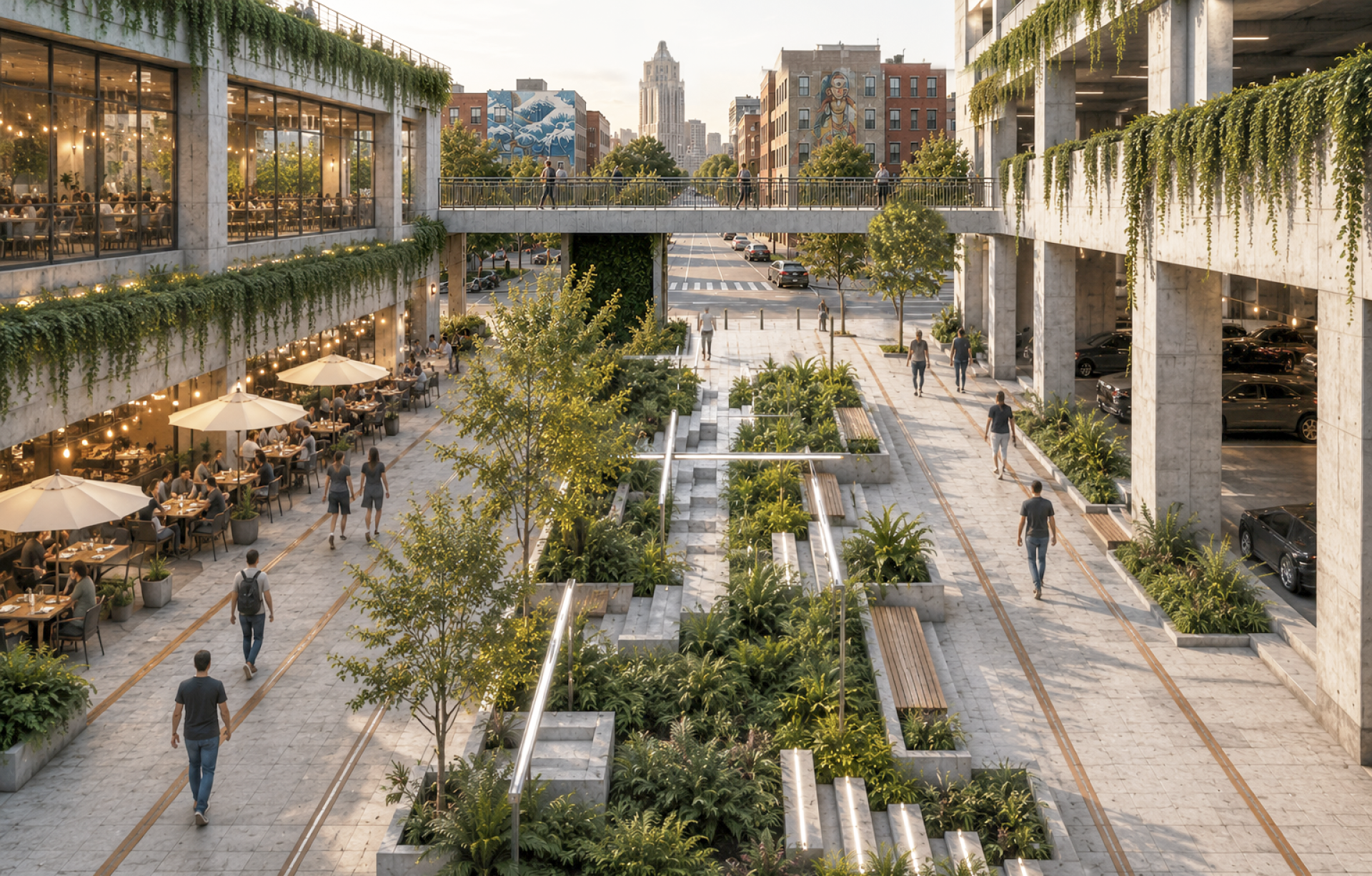
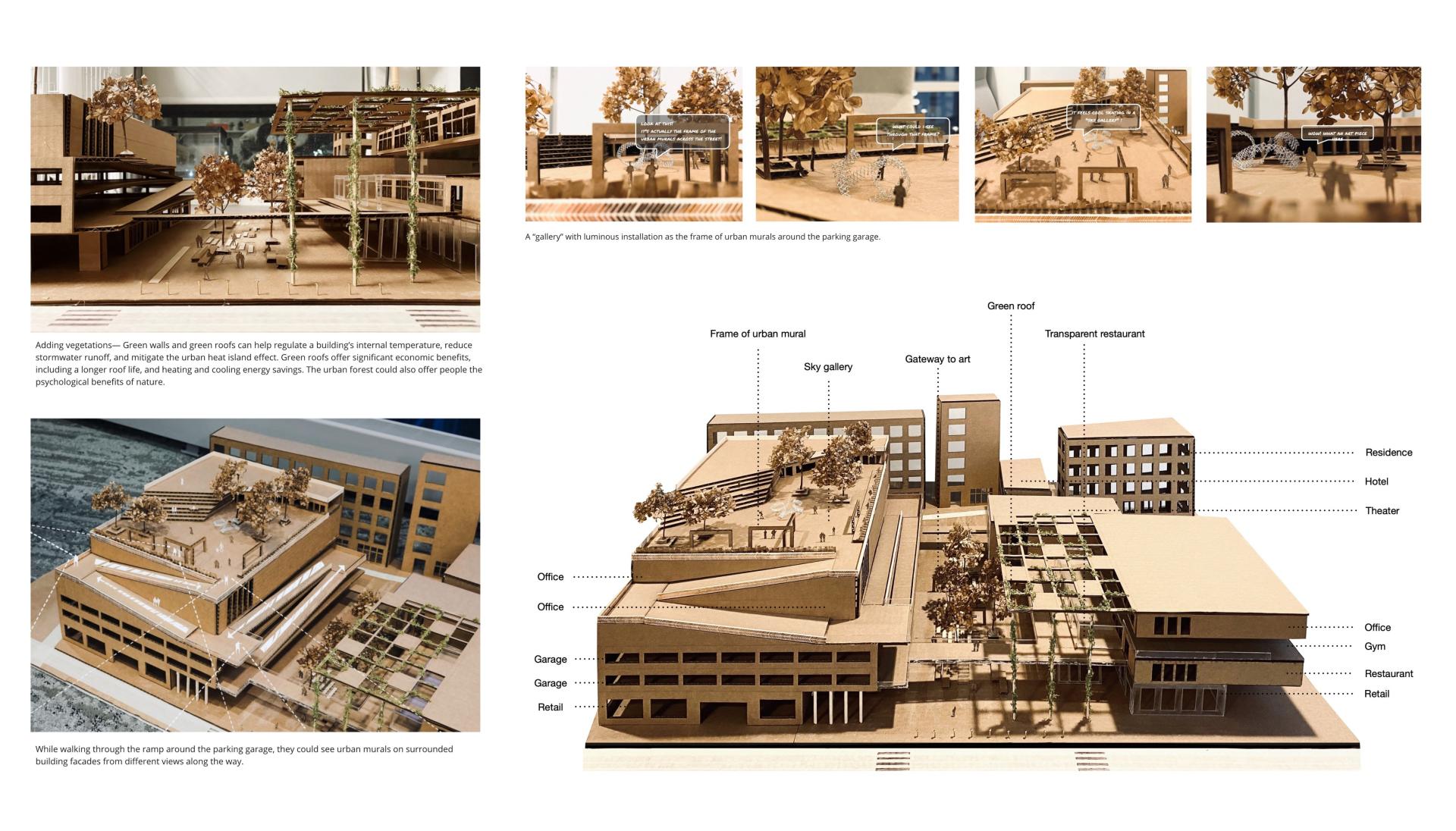
Providence is a city shaped by creativity. Within its compact downtown, dozens of large-scale murals transform ordinary building facades into an open-air collection of public art, creating a city-scale cultural landscape. The Urban Gallery transforms an obsolete parking garage into a renewed public landscape, turning the spaces between buildings into an open-air gallery experience. Rather than demolishing the existing structure, the project uses adaptive reuse as a renovation strategy, preserving the garage’s structural framework while reimagining it as a layered civic space for movement, gathering, viewing, and cultural engagement.
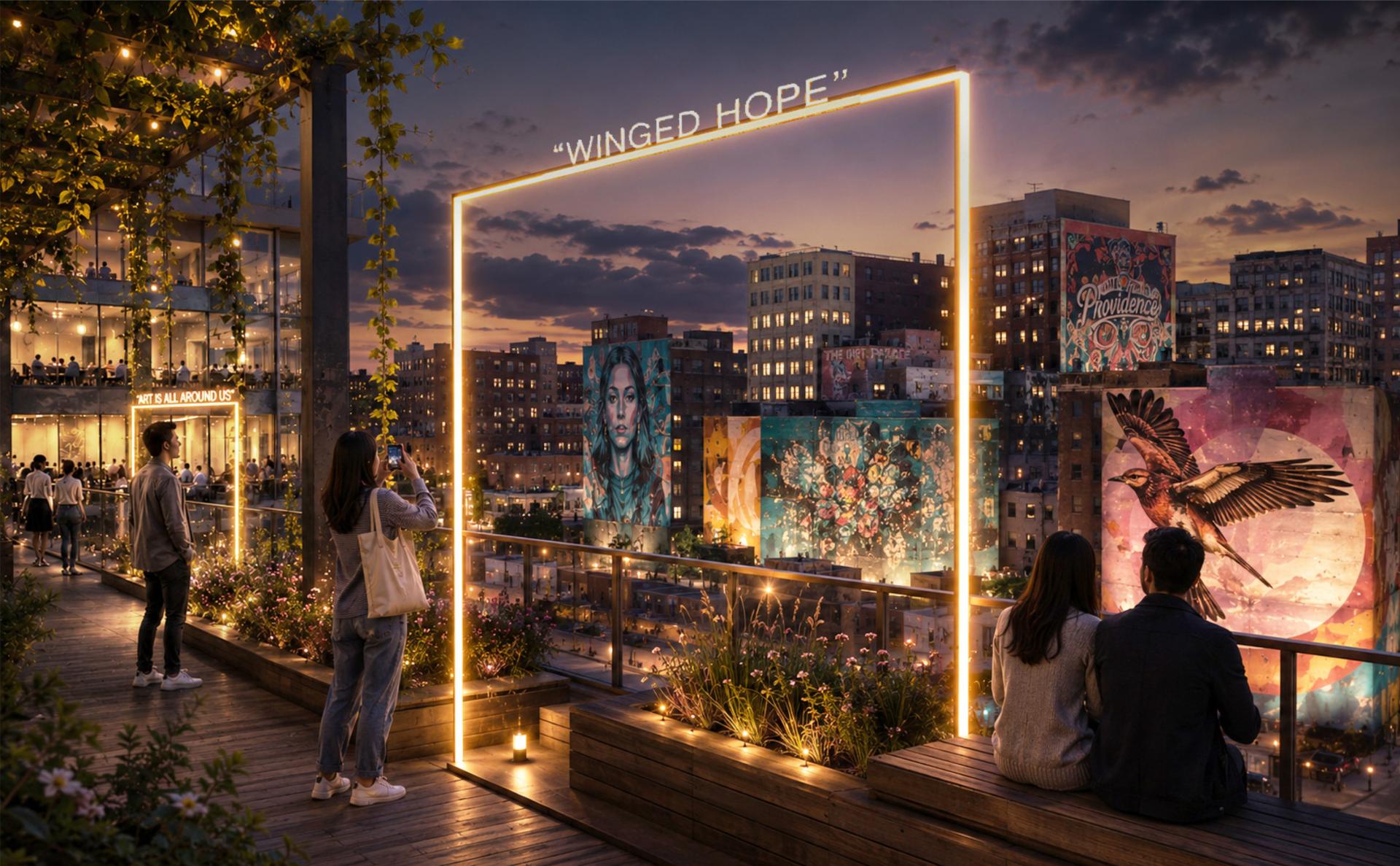
The project begins with the idea that Providence’s existing murals are not isolated artworks, but part of a larger urban collection. However, many of these murals are currently experienced only in passing, from sidewalks, streets, or moving cars. By renovating the parking garage and its surrounding in-between spaces, The Urban Gallery creates new ways for people to pause, approach, frame, and experience these murals as part of everyday public life.
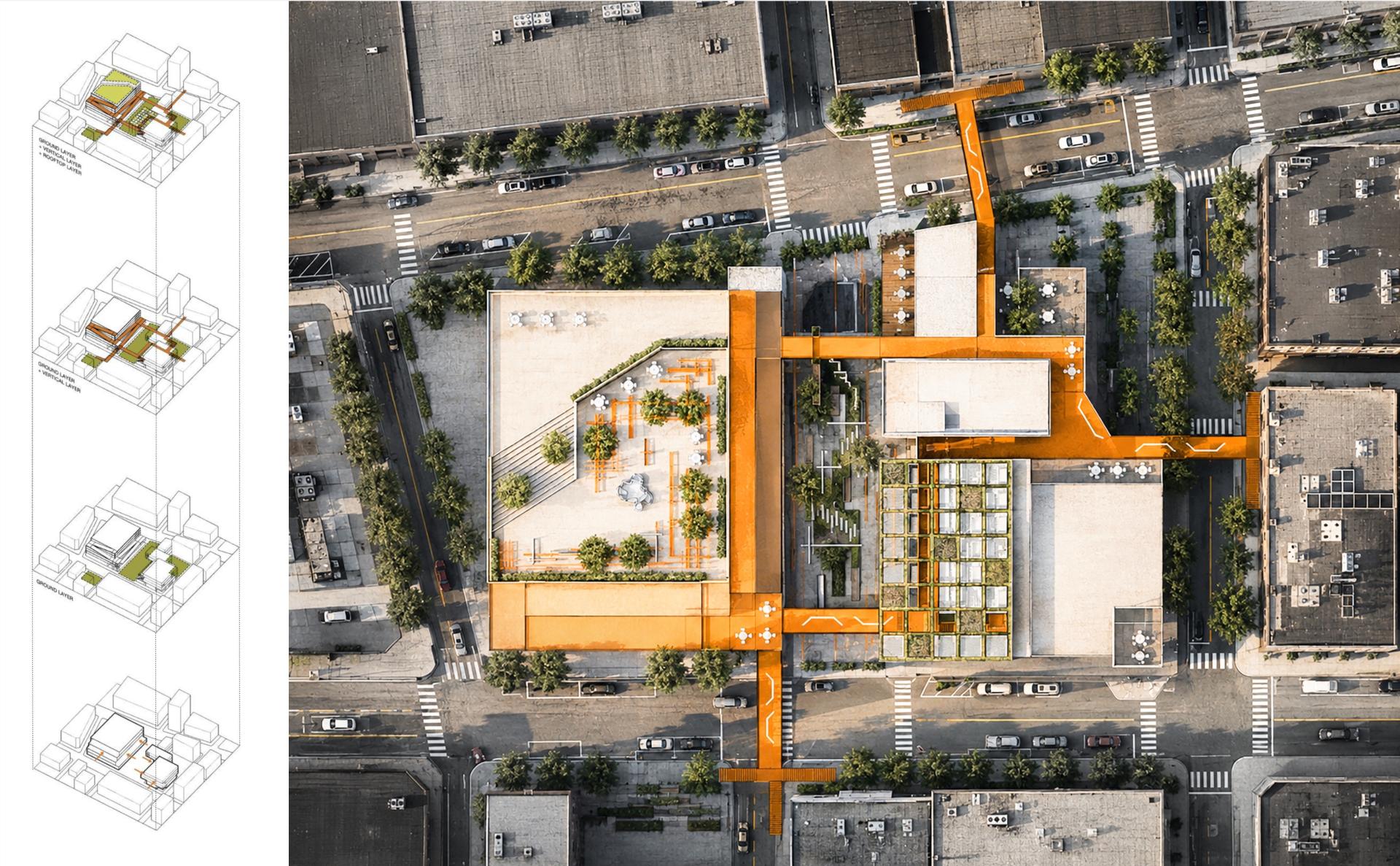
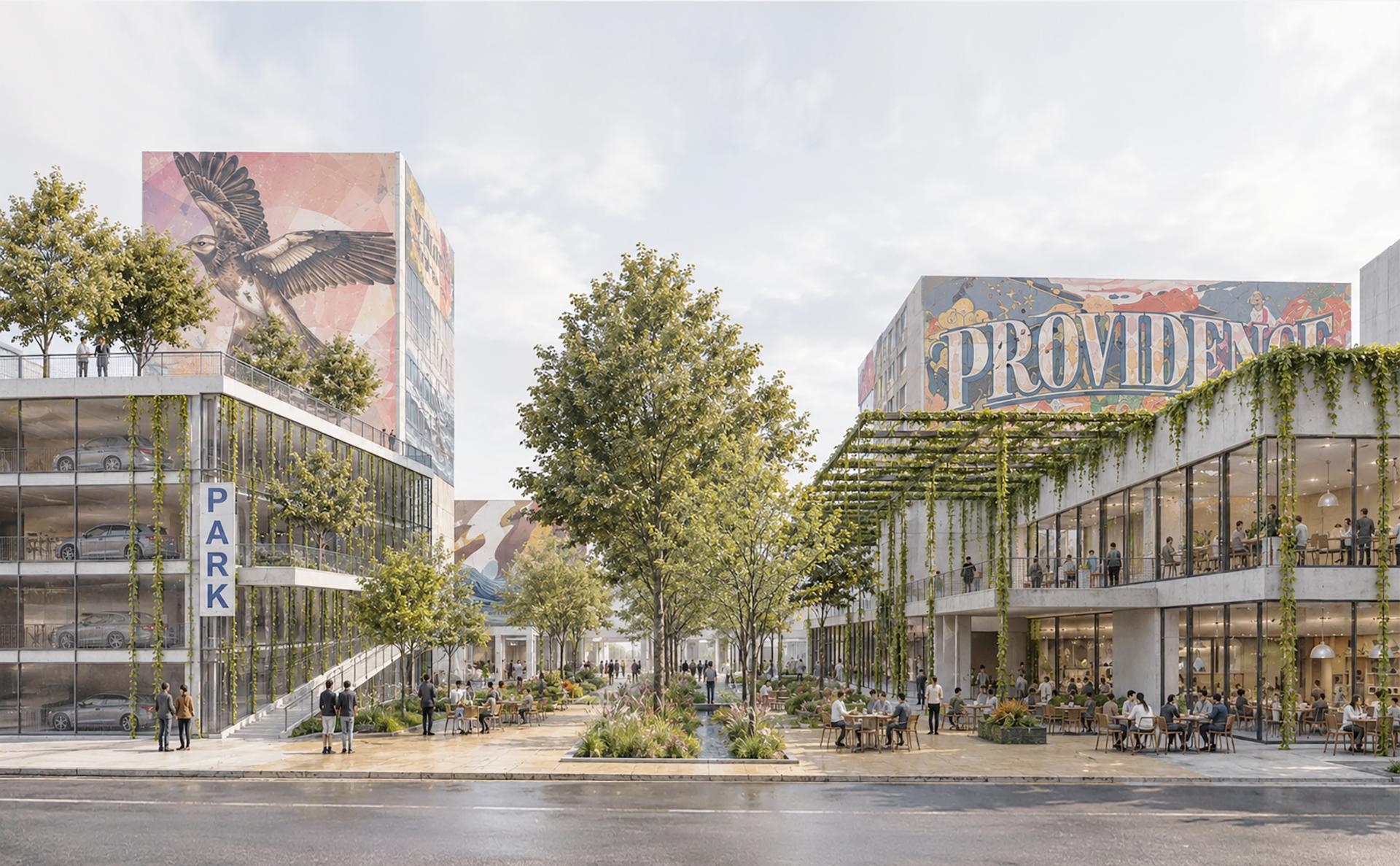
Former parking decks are converted into elevated terraces, viewing platforms, gardens, and public walkways. Ramps, edges, and leftover circulation areas are redesigned as active social spaces, allowing the garage to shift from a car-oriented infrastructure into a pedestrian-focused cultural destination. Between the garage and adjacent buildings, the project introduces connected plazas, passages, outdoor rooms, and landscape insertions that guide visitors through a sequence of mural views.
The murals become the visual and cultural anchor of the renovation. They define the identity of the project, turning the transformed garage into both a viewing device and a public gathering space. Through adaptive reuse, landscape renovation, and framed encounters with public art, The Urban Gallery gives new life to an outdated parking structure and repositions it as a vibrant connector between buildings, people, and the city’s existing mural culture.
Credits
Entrant
C.Y.CHEN Architects & Planners | DA-YUN Interior Design
Category
Interior Design - Gallery (NEW)
Entrant
U-GENE Interior Design
Category
Interior Design - Showroom / Exhibit
Entrant
Mooooi Studio
Category
Interior Design - Showroom / Exhibit