Interview
Yuwei Chen
United Kingdom
Yuwei Chen believes meaningful urban design begins with understanding the people, culture, and environment that shape a place rather than pursuing architecture for its own sake. By focusing on child-friendly and inclusive environments, Chen seeks to create resilient spaces that support wellbeing, strengthen communities, and respond to the changing needs of cities.
1 | Congratulations on your achievement! What inspired you to submit this project for the NY Architectural & Interior Design Awards?
Receiving this recognition is a tremendous honor. The project reflects a design philosophy that I believe is increasingly relevant today: cities should be designed with people at their center, especially those whose needs are often overlooked. The project explores how child-friendly urban design can address broader urban challenges such as social inequality, accessibility, public health, and environmental resilience. Children should be viewed as a benchmark for creating cities that are safer, healthier, and more inclusive for everyone. The NY Architectural & Interior Design Awards provide an international platform to share these ideas, and I hope the project contributes to the broader conversation about the future of people-centered urban design.
2 | What is the defining concept or vision behind your award-winning project?
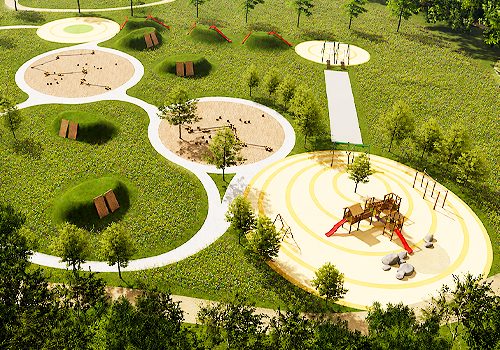
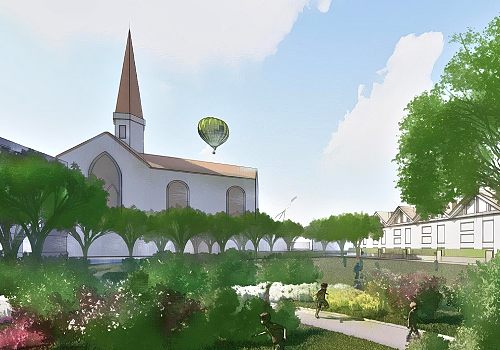
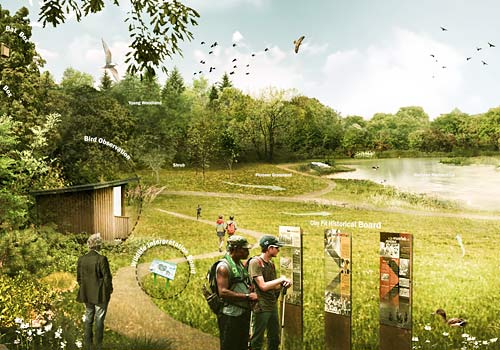
The project's defining concept is believing that a children centered community can ultimately benefit everyone. Rather than treating child-friendly design as the addition of playgrounds or educational facilities, the proposal considers the entire urban environment through the perspective of children's daily experiences. Streets, public spaces, green infrastructure, mobility, and community interaction become interconnected elements that collectively shape wellbeing. The masterplan follows six core principles: health, safety, accessibility, connectivity, participation, and play. By prioritizing these principles, the project seeks to create resilient neighborhoods that support both social and environmental sustainability.
3 | Could you briefly share your journey into architecture and what inspired you to pursue this field?
My interest in architecture and urban design began with a curiosity about how the built environment influences the way people live, interact, and experience their everyday surroundings. Over time, I became increasingly interested in the social responsibility of design. Architecture has the ability to strengthen communities, improve wellbeing, and respond to complex urban challenges. That broader impact is what continues to inspire my work. In addition, I am particularly interested in projects where research, planning, landscape, and architecture intersect to create meaningful and high-quality urban life.
4 | How would you describe the mission or goals of your company or studio?
My design philosophy is centered on creating places that are inclusive, resilient, and deeply connected to people who use them. Also, I believe a successful design begins with understanding the social, environmental, and cultural context of a place. Every project should respond thoughtfully to its surroundings while improving the everyday experiences of its users. Instead of pursuing iconic architecture, I believe in creating environments that foster wellbeing, strengthen communities, and remain adaptable as cities continue to evolve.
5 | Were there any unexpected challenges during the design or construction phases? How did they shape the final result?
During design, I noticed the site was characterized by fragmented development, significant transport infrastructure, socioeconomic deprivation, and physical barriers that limited connectivity. However, instead of viewing these constraints as limitations, they become opportunities to rethink how the neighborhood could form. The proposal focuses on reconnecting communities through pedestrian networks, green infrastructure, and accessible public spaces while transforming underutilized areas into active civic environments. These challenges ultimately strengthened the project by ensuring that every design decision responded directly to the site’s existing condition and policies.
6 | How does your design process usually unfold-from ideation to completion?
I begin by developing a comprehensive understanding of the site through contextual analysis, stakeholder needs, policy review, and observation. This enables me to identify the opportunities and challenges before design proposals are developed. The research then informs a clear design framework that guides the conceptual development, testing of design options, and refinement of the final proposal. For me, design emerges from the integration of rigorous research with creative thinking.
7 | If you had to describe the journey of this project in three words, what would they be?
3 words I would use to describe is realization, exploration, and transformation. Realization because the project begins by understanding the everyday experiences of its users. Exploration because every stage involved questioning conventional approaches and testing new possibilities. Transformation because the ambition was to redefine how urban environments can better support both individuals and communities.
8 | What feedback have you received about your work that has been particularly meaningful or surprising?
One of the most meaningful observations was that the project successfully translated extensive research into a clear and practical design proposal. Several reviewers commented that the work demonstrated how the urban design process can address social issues. Others appreciated that it encouraged them to reconsider children’s perspectives as an essential component of successful city-making rather than a secondary consideration. Knowing that the project prompted a different way of thinking about urban environments has been especially rewarding.
9 | What does receiving this recognition mean for you, your team, or your studio?
This recognition is both an honor and an encouragement. It validates the value of research-driven, socially responsive design and reinforces my philosophy that architecture and urban design should contribute meaningfully to people’s everyday lives. More importantly, it motivates me to continue pursuing projects that combine design excellence with positive social and environmental impact.
10 | How do you see this award influencing your future projects or career?
This award influences my commitment to pursuing my research-led design that addresses modern urban challenges. It also provides an opportunity to engage with a broader international design community, exchange ideas, and continue developing projects that integrate architecture, urban design, landscape, and sustainability. I hope this recognition serves as a foundation for future collaborations and increasingly ambitious work.
11 | What's a project or idea you've been dreaming of bringing to life, and why does it inspire you?
I would like to design a neighborhood where child-friendly principles are embedded into every aspect of the urban environment, from mobility and public space to housing, education, ecology and community life. In addition, I envision a holistic urban model where everyday experiences naturally encourage health, independence, social interaction, and environmental stewardship. I believe projects of this scale have the potential to redefine how future communities are planned.
12 | Where do you see the architectural field heading in the next decade, and how do you envision contributing to its evolution?
I believe architecture is becoming increasingly interdisciplinary. Modern urban challenges, such as climate resilience, public health, social equity, biodiversity, and technological change, cannot be addressed through architecture alone. Future practice will require greater collaboration across disciplines and stronger engagement with local communities. I hope to contribute by developing research-driven design strategies that balance environmental responsibility with social value, creating places that are both resilient and genuinely responsive to human needs.
13 | How do you see your designs contributing to the future of sustainable architecture?
For me, sustainability extends beyond environmental performance. Truly sustainable places must also support social wellbeing, accessibility, resilience, and long-term community development. My work seeks to integrate green infrastructure, walkability, biodiversity, and inclusive public spaces into a cohesive urban framework where environmental and social sustainability reinforce one another. I believe that sustainable design should ultimately improve not only how cities perform, but also how people experience them.
14 | If you could design anything, with no limits on budget or imagination, what would it be?
I would design an entire city guided by the principle of human wellbeing. It would be a place where nature, mobility, public life, and architecture exist in harmony, allowing people of all ages to move safely, interact freely, and remain closely connected to their communities and the natural environment. While the vision would be ambitious, its underlying objective would be simple: to create a city where design consistently enhances everyday life. I believe that when we design with empathy, inclusivity, and long-term resilience in mind, we create cities that benefit everyone. In fact, my existing urban design project again focuses on creating a child-friendly community, which I hope will actually happen in the future.